Russia’s Multi-Front Failure Explained: Cormac Smith Analyzes Ukrainian “Trident Strategy”

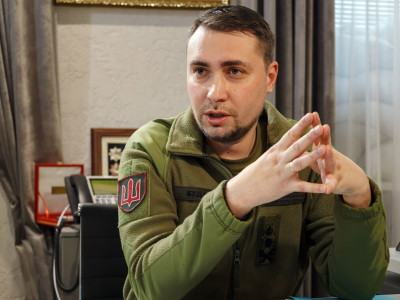
In an exclusive interview, you’ll hear sensational analysis from Cormac Smith — former advisor on strategic communications to Ukraine’s Minister of Foreign Affairs and ex-advisor to the UK Cabinet of Ministers during the cleanup of the chemical attack in Salisbury. As of June 2026, the expert states: there is no “dead end” on the front, systematic destruction of Russia’s defense is ongoing at all levels.
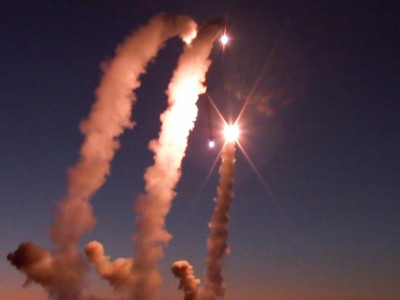
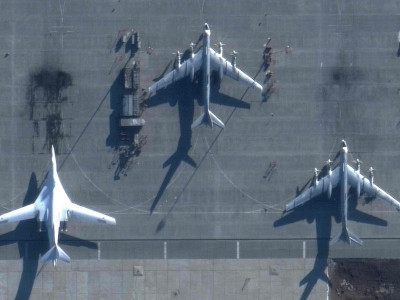
The British strategist thoroughly breaks down Ukraine’s unique “Trident” strategy, through which the Armed Forces of Ukraine and Special Forces simultaneously wage war on three fronts: on the confrontation line, along the occupiers’ rear logistics lines, and through DeepStrike strikes on Russia’s energy heart. You’ll learn why the daily fires at the Moscow oil refinery in Kapotnya are not just symbolism, but a powerful psychological strike on Russia’s middle class.
— Today, together with you, I would like to break down the hottest topics of recent days. Well, of course, Moscow on fire — and that is no longer a metaphor. What does the strike on the capital’s oil refinery tell us about? Let’s call it gaps in Russian air defense. Another topic: Ukraine is hitting oil facilities, fuel depots, and railways. Is this systematically bleeding the Russian war machine dry or not? We’ll also talk about the Kremlin’s response and its threats. And finally, what do Ramstein and the anti-ballistic missile program mean for the future of the front line? So, let’s begin with Moscow on fire.
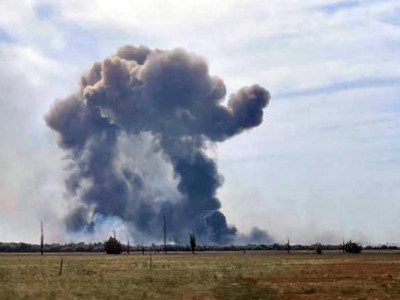
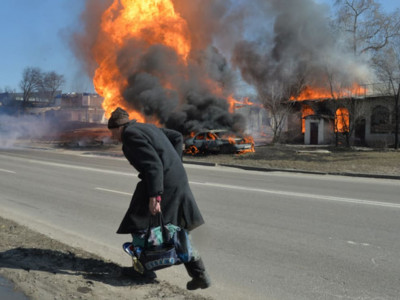
This Thursday, an oil refinery exploded in Moscow — literally inside the city. Black smoke rose over the capital, storage tanks were blown up, and everyone saw the footage. These were not images from some remote oil depot in Siberia. This was the heart of Russia. For me personally, and I think for many Ukrainians, it was emotional to watch. But strategically speaking, what does the strike on the Moscow refinery mean?
— Henry, it means two things. First, let’s look at it from the perspective of the war effort. I recently described the situation — not as a military man, but as a civilian and former diplomat — as the three points of a trident. And of course, the trident is the great symbol of Ukraine.
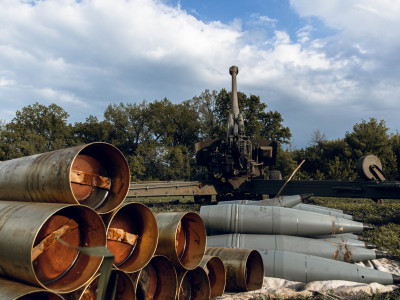
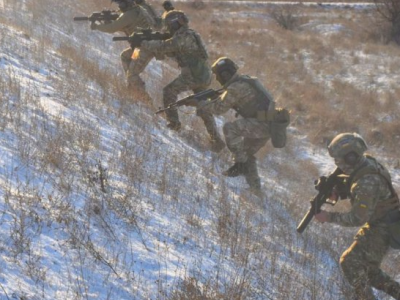
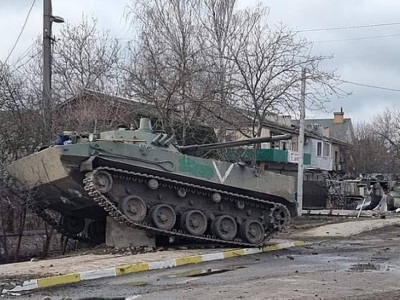
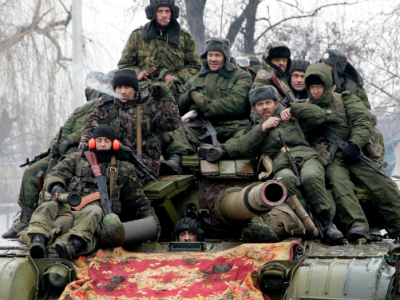
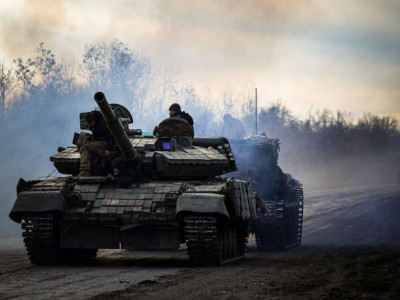
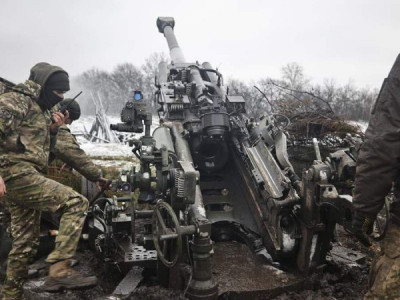
The first point of the trident is the front line itself. There we see Russian forces getting absolutely hammered. Current estimates suggest that Ukraine is killing Russian troops at ratios ranging from six-to-one to eight-to-one. It was actually President Alexander Stubb of Finland who, only two weeks ago, estimated the ratio to be as high as eight-to-one. We know that Russia is losing between 30,000 and 35,000 troops per month. To put that into perspective, that is roughly twice as many casualties in a single month as the Soviet Union lost during ten years of war in Afghanistan.
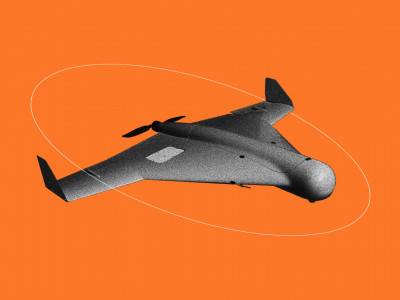
We also know that Putin cannot recruit replacements fast enough to make up for those being killed or severely wounded. So things are going very badly for Russia on the front line. That is the first point of the trident. The second point is that Ukraine has effectively opened a second front by targeting Russia’s logistics network. On average, Ukraine is reportedly destroying between 400 and 500 fuel trucks and other logistical vehicles carrying ammunition, food, and supplies needed at the front.
But now we come to your question — the third point of the trident: deep strikes. These deep strikes are important for two reasons. First, they are devastating Russia’s oil industry. Russia has often been described as a gas station with nuclear weapons. Oil and energy exports are what fund much of the state. I was listening before coming on air to Professor Scott Lucas from University College Dublin, who follows Ukraine very closely. He suggested that up to 40 percent of the Russian state budget is now being devoted to what the Kremlin calls its “special military operation.”
That places enormous strain on Russia. But perhaps even more importantly, these strikes are bringing the war home to ordinary Russians. Yesterday morning, my best friend in Kyiv and I were discussing the strikes on Moscow. I understand there is a sense of euphoria across Ukraine about these developments. My friend said something that perfectly captured the mood: “Now it is time for ordinary Russians to meet ordinary Ukrainians.” In other words, they are beginning to experience a small part of what Ukrainians have endured for years.
But there is something even more important. In recent weeks, Ukraine struck St. Petersburg during the St. Petersburg International Economic Forum. That is the event where Russia gathers investors, influencers, and business leaders from around the world to present itself as a great power, a great economy, and an attractive investment destination. What message did Ukraine send by striking a naval dry dock and an oil refinery during that event? They effectively provided a fireworks display for the delegates attending the forum.
And now this week we have seen strikes on Moscow. I believe this is the third consecutive time that Ukrainian drones have penetrated Moscow’s airspace. What matters here is not only the fuel shortages, rising prices, and queues at gas stations that we increasingly hear about. What matters is who is being affected. The impact is now reaching a very specific social group: the middle classes and the wealthy residents of Moscow and St. Petersburg.
Correct me if I’m wrong, but there has long been an unwritten social contract between Putin and those groups. The understanding was simple: their wealth, lifestyles, and relative comfort would not be disturbed. Meanwhile, the recruits sent into the meat grinder over the last four and a half years have overwhelmingly come from distant regions of the Russian Federation. Now that arrangement is being challenged. The strikes are exposing vulnerabilities that many Russians believed did not exist.
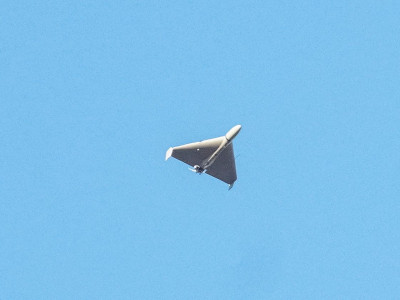
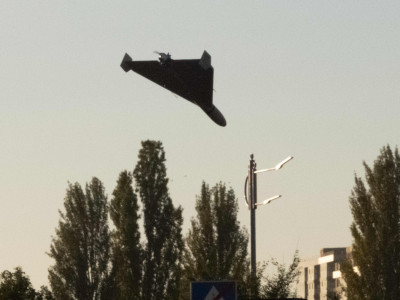
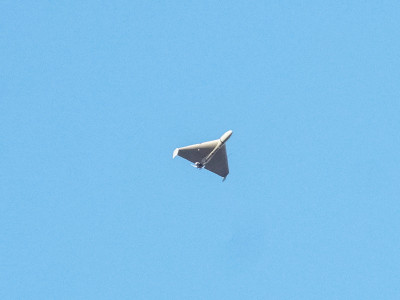
Yesterday, I heard reports that more than a thousand drones and missiles were directed toward Moscow. Russian authorities claimed to have intercepted fewer than two hundred. If that is accurate, it presents a very different picture from what we hear when Russia attacks Kyiv, Lviv, and other Ukrainian cities, where Ukrainian air defenses reportedly intercept the overwhelming majority of incoming threats despite operating under enormous pressure.
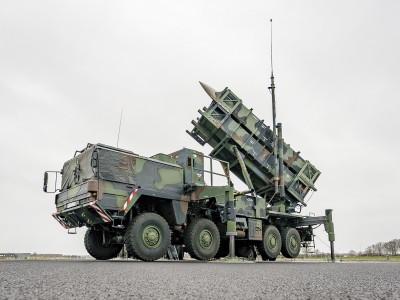
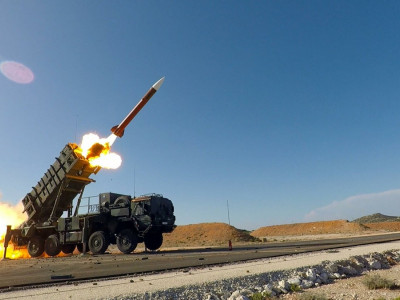
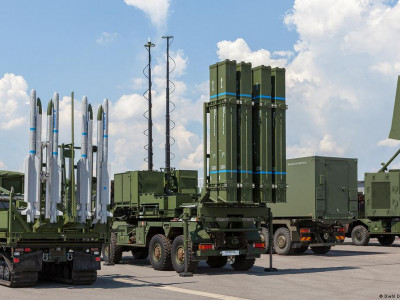
— You’re absolutely right. I can’t correct you because you’re not wrong. I live in Kyiv, I hear it and I see it. Every wave of terror that comes every night is met by our air defense. Some targets still get through and cause damage, but interception rates are often 60, 70, 80, sometimes even 90 percent. Occasionally all incoming targets are shot down. It’s an incredible achievement by Ukrainian air defense. In Russia, however, the situation appears to be the exact opposite.
The recent attack obviously sent shockwaves straight to the Kremlin. Yet the Kremlin remained silent for almost 24 hours. Then Sergei Lavrov appeared with the usual rhetoric, threats of massive retaliatory strikes and similar statements. Is that a sign that the strike was truly painful? Or perhaps they simply do not care? Maybe Moscow is trying to project the image that everything is proceeding according to plan, that everything remains under control.
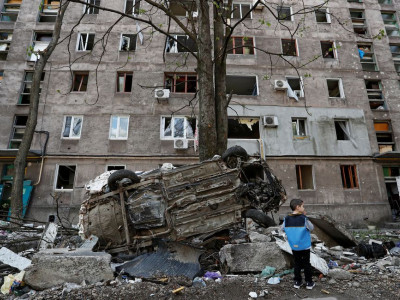
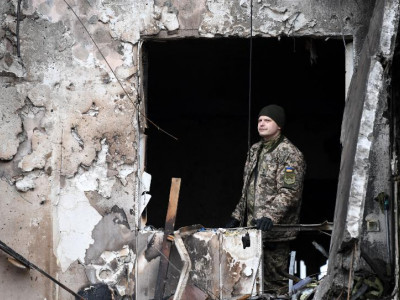
— Look, Henry, I’m going to say something that I don’t need to tell you, but I think viewers should hear it. First, this is a moment when people across Europe and around the world need to recognize the fundamental difference between Ukrainians and Russians. When Russia strikes Ukraine, it deliberately targets civilian infrastructure, apartment buildings, homes, and civilians. It murders men, women, children, and even babies.
What Ukraine is doing, by contrast, is targeting military objectives, logistics hubs, and Russia’s war economy. These are legitimate military targets under the laws of war and the Geneva Conventions. What Russia does constitutes war crimes. This is the difference between barbarism and civilization.
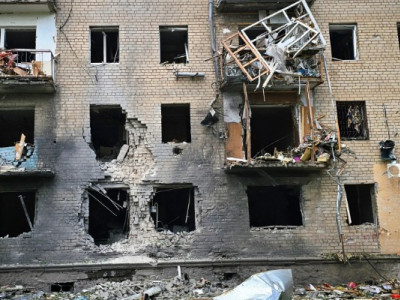
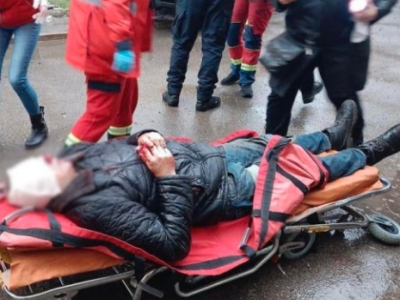
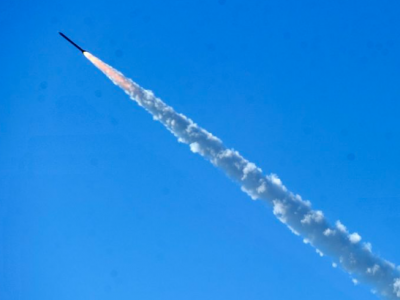
Even in the middle of an existential war, Ukraine continues to behave in a civilized manner and follows the rules as much as it possibly can under such circumstances. Russia, meanwhile, continues to deliberately murder civilians, not only with drones but also with precision ballistic missiles. We have all seen the images of ballistic missiles crashing into apartment blocks and residential neighborhoods. That is the first point I want to make.
The second point is that the Kremlin has traditionally maintained an iron grip on information and communications. However, it increasingly appears that this grip is beginning to weaken. The bombardment of Moscow was filmed everywhere by ordinary people with their phones. The Kremlin cannot prevent people from witnessing these events. It may attempt to control the narrative, but ordinary Russians know what they saw with their own eyes.
— Exactly. But you understand very well how Russia builds narratives of resilience around obvious setbacks and defeats. The Kremlin is undoubtedly trying to reframe these strikes for domestic audiences, even if not for international ones.
— Henry, let me jump in there. One of the biggest lies that has been imposed on all of us is the claim that there is no amount of suffering the Russian people cannot endure. We have been told since the beginning of the full-scale invasion that Russia cannot be defeated, that Ukraine’s only option is surrender or some kind of capitulation deal. The Kremlin has spread this narrative not only inside Russia but across Europe and the wider world. It has put these arguments into the mouths of useful idiots, paid agents, and sympathetic political figures in many countries. But it is simply not true.
Look at Russia’s history. Russia has lost most of the wars it has fought.
It lost in Afghanistan. It would have lost the Second World War without the enormous support provided by Britain and the United States through Arctic convoys and Lend-Lease assistance. As a student of
- Last
-
-
-
- June, 27
-
-
-
-
-
-
-
-
-
-
-
-
-
-
-
-
News by day
28 of June 2026