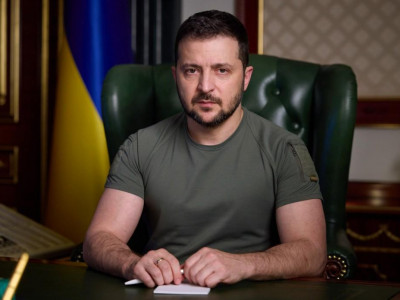
"Zelenskyy made a mistake. We should avoid handing over Polish-Ukrainian relations to radicals"

Aleksander Kwaśniewski was president of Poland when the country joined the EU and NATO. With his support, governments implemented painful reforms which ultimately turned Poland into a regional leader.
Because of this, Kwaśniewski still enjoys a high level of authority in Poland and can afford to speak openly about things that are unpopular that it would be risky for current politicians to talk about. He has also been an unwavering supporter of Ukraine and believes that Ukraine’s accession to the EU and NATO would benefit Poland itself.
Kwaśniewski’s wife’s family comes from a village in Ukrainian Volyn. His father-in-law survived the Volyn tragedy. [The Volyn (Volhynia) tragedy was a series of events that led to the ethnic cleansing of the Polish and Ukrainian populations in 1943. The tragedy was part of a long-standing rivalry between Ukrainians and Poles in what is now Ukraine's west.] Kwaśniewski now says that when he was negotiating with President Leonid Kuchma on the policy of Polish-Ukrainian reconciliation, he only became fully convinced that this was the right approach after the actions of the state also convinced his father-in-law and his family.
The sitting president of Poland, Karol Nawrocki, is moving in the opposite direction and using the conflict with Ukraine as one of his electoral tools.
At the same time, Aleksander Kwaśniewski places most of the responsibility for the current escalation of tensions on Kyiv.
He insists that Volodymyr Zelenskyy made a mistake and urges him not to repeat it, warning that it could lead to destructive consequences.
We spoke with the former president ahead of the YES discussion held in Gdańsk on the eve of the Ukraine Recovery Conference (URC-2026), organised by the Victor Pinchuk Foundation. In this interview you can read about Kwaśniewski’s conversation with Kyrylo Budanov, Ukraine’s prospects for joining the EU and NATO, and the possibility that a breakthrough in the war with Russia could (and, in his view, should) happen in the coming months.
Mr President, you once led Poland into the EU. You have said many times that you are convinced that Ukraine will also become a member of the European Union. Do you still believe that?
I still believe that. Especially because the Americans decided not to propose NATO membership for Ukraine, I think it’s absolutely necessary to negotiate effectively and to prepare both sides – the European Union and Ukraine – for Ukraine’s membership.
I know that it is not easy, but it must happen.
All the EU member states will need to agree to it. Do you believe that the Poles will agree?
Yes! And the problem is not only in Poland – this anti-Ukrainian card is also being played in Germany, everywhere.
Who is doing this?
Well, do you remember who played the Dutch referendum? That is serious. [Editor’s note: Numerous investigations point to Russia’s involvement in organising and promoting the anti-Ukrainian referendum in the Netherlands in 2016, but Kwaśniewski did not mention Russia by name.]
Regarding Poland, I hope that pro-European democratic parties will win the next elections. For that, it’s very important to avoid mistakes.
The decision of President Zelenskyy to name the military units [after the Heroes of the UPA] was a mistake.
These anti-Ukrainian sentiments are present. In Poland, there are two parties speaking openly against support for Ukraine – Konfederacja [Wolność i Niepodległość, Confederation Freedom and Independence] and Konfederacja Korony Polskiej [KKP, a pro-Russian party led by Grzegorz Braun – ed.], and they have something like around 23%.
They aren’t the only ones opposing Ukraine. President Nawrocki is as well. He was elected as the candidate of the Law and Justice party (PiS).
He is a special case. Before the election, he was very tough on all these issues of the history of Volyn, the UPA, etc. He is a very radical person, and he wants to be the leader of this coalition of right-wing parties after the 2027 election, if these parties together form a majority.
If that happens, that would be bad news for you, for Poland and for the European Union.
More than 20 years ago, you and Ukrainian President Leonid Kuchma agreed on the formula "We forgive and ask for forgiveness." Why has this approach stopped working?
We agreed that almost 30 years ago, in 1997, in the declaration about Polish-Ukrainian reconciliation.
We achieved some progress in implementing it, which was very difficult, as we still had a lot of witnesses or members and the families of victims of the Volyn massacre. But it worked.
Maybe in the years that followed, we didn’t invest enough effort to keep it going. There was not enough dialogue between historians, intellectuals and academics. But we still had a good chance for reconciliation at the beginning of the [full-scale] war, when millions of Ukrainian refugees were welcomed by the Polish people, and it was not organised by the authorities. It was a spontaneous reaction coming from their hearts.
I hoped then that we would have a new pillar for the Polish-Ukrainian relationship.
But I understand the psychological reasons why that changed later. Year by year, people become tired of the war. And we have seen unacceptable behaviour by some Ukrainians, like recently when a Ukrainian influencer drove to Morskie Oko [a lake in a protected area of the Tatra mountains where cars are banned], or the Ukrainian lady who was caught driving a Porsche at 220 km/h in Warsaw, or that fishing guy. Stupid things, but they really created an atmosphere of irritation.
There are 1.5–2 million Ukrainians in Poland. Inevitably, some of them will break the rules.
Absolutely! The majority is absolutely okay. They work. They help the Polish economy very much. But this is about psychology.
The atmosphere is supported by politicians who cynically use it to amplify these cases.
You mentioned that you consider a decision by Volodymyr Zelenskyy a mistake.
Let me tell you: I was very much afraid from the very beginning of this difficult process of reconciliation, that one day we will offer Polish-Ukrainian relationships to radicals.
Today, we are close to it.
If that happens, if radicals from both the Ukrainian and the Polish sides become the mainstream of Polish-Ukrainian relationships, it would be the beginning of a catastrophe.
We are not there yet.
Look at the decision of President Zelenskyy. Was it by chance? Did it happen by accident?
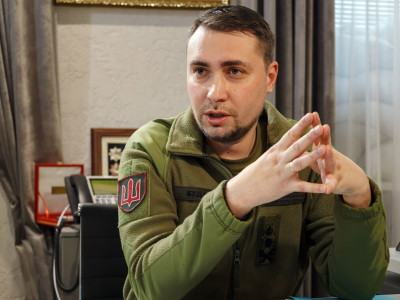
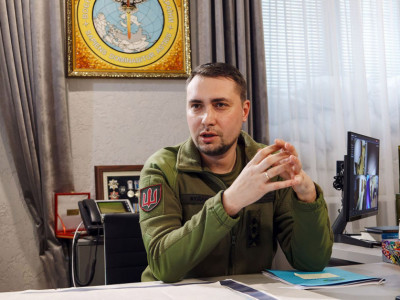
You met with Kyrylo Budanov [Head of the Office of the President of Ukraine] in Warsaw. Did you get the impression that it was a mistake or a deliberate and calculated step?
I think it was wrongly calculated. It happened because of pressure from somewhere.
We didn't discuss in detail with Budanov the procedure of this decision. Budanov came to Warsaw to clean up the situation, to facilitate next steps, but that didn't happen.
I want to repeat again: we should avoid giving the Polish-Ukrainian relationship to radicals,
because it would be extremely dangerous.
You do understand that it is impossible to reverse the decision to name this unit after the Heroes of the UPA?
Politically, of course, and that’s why the situation is so difficult for both sides. Zelenskyy can’t change his decision and Nawrocki can’t change his decision. So we are where we are.
And I understand why Zelenskyy did not come here to Gdansk. It’s good that we have a delegation with the Prime Minister at the top. But I don't understand why the president of Poland announced his decision four days before the conference started. He had already waited for two weeks and he could have done it two days after…
The reason is obvious: to disrupt the conference and make life more difficult for Prime Minister Tusk. This is domestic politics.
Your understanding might be correct, but I myself cannot say so.
Is there a way to cool the tension down?
Time is the best medicine for that, on one condition: if we do not escalate. Both sides.
That’s why now it’s important to have the conference flow normally, with ministers meeting each other and so on.
In Ukraine, there is a widespread feeling that Nawrocki is seeking escalation.
Nawrocki will do everything possible to help the right-wing opposition to win the 2027 election.
Nawrocki’s plan is to reform Poland's division of power to have a much more presidential system – like in Ukraine.
He has no chance of changing the constitution in the foreseeable time, it is impossible – you can’t get a two-thirds majority in polarised Poland.
But even without amending the constitution, he can organise a more presidential system. For that, he wants to be the man who organises the coalition deal between PiS, Konfederacja and Braun’s party Konfederacja Korony Polskiej. With this, Nawrocki will nominate a prime minister who will be very close to him, and this will create a much more presidential system in Poland.
Will he play the Ukraine card again for that purpose?
Ukraine will become a topic of the next elections. That’s for sure. That's a risk, of course.
There will be constant attempts to escalate. Konfederacja will escalate, Braun will escalate. Nawrocki will, of course.
That would be a huge task for Ukraine to avoid giving them ground, to prevent further escalation through its own actions.
At the same time, it would be the task for democratic forces in Poland to calm society down – by facts, by information. An example of the information the Polish government should be communicating much more widely is the positive impact that Ukrainians living and working in Poland are having on the Polish economy.
We need to talk more about things like that, otherwise history will be the only thing discussed about Ukraine.
Politicians come and go. But according to polls, Polish society is becoming more and more anti-Ukrainian…
First of all, I don't trust public opinion polls. We have seen a lot of election polls that turned out to be wrong. I travel around Poland a lot and meet many people.
There is indeed some irritatio
- Last
News by day
26 of June 2026