Med Spa Nation

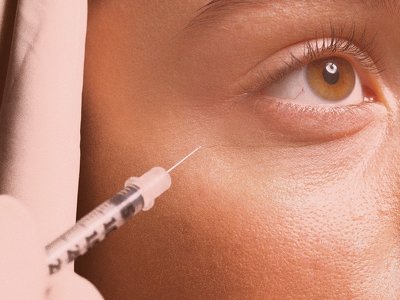
On a recent trip to grab groceries in my New York City suburb, I drove by a small, simply marked door for Westchester Laser Associates, which is in the same plaza. A few steps away, a large sign between two awnings reads “Ject.” They’re two med spas competing for customers—although Ject would seem to have the upper hand, with a huge storefront and minimalist-chic aesthetic that’s practically screaming (or, rather, whispering) Jenni Kayne. Both blend seamlessly among the Chopt, SoulCycle, and Starbucks in the shopping center—grab a salad, go for a spin class, sip an Americano, get an injection of botulinum toxin.
Back in the car, I’m listening to a game on the radio that’s sponsored by another med spa—which, the DJ says, “does everything: Botox, filler, nails.” And when I pick up my daughter from day care, I stroll past yet another one—this time specializing in “body contouring,” according to a decal on the door. It’s housed in an enormous first-floor office suite, and I can glimpse the white lacquered reception counter inside.
There are almost as many med spas in America today as there are McDonald’s locations. The industry has mushroomed from roughly 1,600 med spas in the US in 2010 to about 10,500 in 2023, according to the most recent trend report from the American Med Spa Association (AmSpa), which was released in November 2024. It also predicts that there could be as many as 13,000 med spas by the end of 2026. (There were 13,557 golden arches in the country at the end of 2024.) In recent years, the med spa industry has grown by at least $2 billion annually, says AmSpa, which is not so surprising when you consider that demand for the types of treatments offered at med spas (injectables, lasers, radiofrequency—things that don’t involve a scalpel) was up 79% over the last five years, according to the American Society of Plastic Surgeons (ASPS). Med spas provide the supply, in most cases, more conveniently and at a lower cost than a board-certified doctor would.
Source: AmSpa 2024 Medical Spa State of the Industry Report
Like McDonald’s, people keep going to med spas despite what a lot of health care professionals say—fast filler, like fast food, isn't generally recommended by doctors. Or by Allure. Our stance since med spas arrived on the scene in the late ’90s has been simple: Don’t have any procedure that crosses the skin barrier if there’s not a board-certified dermatologist or plastic surgeon present. It’s a position that’s aligned with that of those doctors, many of whom raise serious safety concerns about the med spa industry. Their argument: These businesses offer medical procedures that come with medical risks, not low-stakes aesthetic tweaks. They should be administered by the medical professionals most qualified to perform them—and to handle their complications.
But let’s face it, med spas also pose a threat to the lucrative nonsurgical and aesthetic arms of plastic surgeons’ and dermatologists’ practices. These doctors certainly have their own skin in this game. On one hand, they’re correct: When availing yourself of a syringe full of hyaluronic acid that could block an artery or laser beams that can sear flesh, your safest bet is to be in the presence of the most highly trained medical professional possible. On the other hand, it could be argued that there is also somewhat of a turf war at play here.
And the reality is that the majority of people who visit med spas do so without harm. One small survey published in the journal Dermatologic Surgery in 2023 found there was not a statistically significant difference between the rates of complications at med spas and doctors’ offices, though there was a numerically greater rate at med spas: 16.4% of med spa patients had at least one issue versus 11% of doctors’ office patients. These numbers get a little more interesting on a granular level: Minimally invasive skin-tightening procedures had a 77% complication rate at med spas compared to zero at doctors' offices. (The study does not mention any one treatment by name, but radiofrequency and ultrasound are most commonly used to tighten the skin without surgery.) Nonsurgical fat reduction (like CoolSculpting) had a complication rate of 80% at med spas, compared to 36% at physicians' offices.
Source: “Medical spa facilities and non-physician operators in aesthetics,” Clinics in Dermatology, May-June 2022
But while serious complications at med spas are not common, they can be extreme. “I've seen the whole nose destroyed in a couple of people because [med spa injectors] block the angular artery, which feeds this area,” says New York City double board-certified plastic surgeon Melissa Doft, MD. After signing up for so-called liquid nose jobs, "their entire nose was killed." When filler cuts off blood supply to the tissue, the tissue dies (this is called necrosis).
Shopping around for the cheapest filler doesn’t mean you’ll lose your nose—this is a very rare complication—but you might get a cheap-looking effect. “I've had several patients do the consultation with me, go to a medical spa, have an awful result, and then come back to me to fix it,” says Sara Hogan, MD, a board-certified dermatologist in Washington, DC, who also has a master's degree in health care policy and does research on the subject. “It’s not even that something awful happened. They’re just not pleased with what the result looks like.”
America appears to be unfazed, for the most part, by any heightened risk that could come with visiting a med spa. As the standard of beauty shifted—lips got poutier, furrowed foreheads became taboo—med spas brought the look within reach. The public has had little interest in looking this gift horse in the mouth, and regulators have done little to control this whole new category of business that has managed to de-medicalize medical procedures in just a few years.
So we find ourselves living in Med Spa Nation. And Allure has spent the last year exploring this land—because sometimes stances need to shift from black-and-white to “here’s how to navigate the gray, if you choose to go there.”
“Does anyone have a friend who’s been to a med spa?” It was a question posed to a group of Allure editors, aged 24 to 48. Everyone raised their hand. And that is how I came to talk to Kristen, 42, who gets neuromodulator injections from a registered nurse every few months—but only goes to a dermatologist for her undereye filler (“It’s too close to my eyeballs”). And Lynda, also 42, who got her first Botox from a dermatologist in 2014 and paid $600. She’s gone to a med spa ever since—“Over 10 years later, it’s still only $500.” Lynda got a serious bruise and extremely swollen lymph nodes once after an appointment, but that nurse injector was gone the next time she went; there have been no issues since. Simone, 32, was a little nervous about the risks of laser hair removal on her melanated skin, but after starting with her bikini line at one large med spa chain she’s continued with her legs, underarms, and chin. She was comforted when, at her first appointment, the Black nurse practitioner told her she had done laser hair removal herself. And she finds the convenience unmatched—“I wanted something with locations close to my apartment and to my office so that I would definitely keep up with the appointments.”
Med spas tend to charge less than a doctor’s office, and in most parts of the country, they’re easier to find than board-certified dermatologists, who usually set up shop in and around major cities, according to a 2024 article in the Journal of the American Academy of Dermatology. That research found that Clovis, California, is one of the least dermatologist-dense areas of the country: In this city of 125,000 people, there were two dermatologists as of 2023. A recent Google search turns up at least eight med spas there. In the most dermatologist-heavy area of the country—New York City’s Upper East Side—there are 30 board-certified dermatologists, but you can still find at least 50 med spas not far from the upscale storefronts of Chanel and Hermès.
In New York City, the med spa chain Peachy “is right in the plaza where my office is, so I can go down and get Botox and be back at my desk in 15 minutes,” says Kristen. The nurse practitioner she sees most often has been, if anything, too light-handed, so she’ll sometimes go back for a touch-up. All told, she considers it pretty low-risk. “I feel like if your Botox is wacky, you can correct it,” she says. “It's just Botox.” (Actually, unless you just need to correct an asymmetry—by adding extra Botox to one side—you have to wait a few months for it to wear off.) And the convenience is unmatched: “I can walk right in.” Kristen used to get Botox from a dermatologist. Now, she pays $200 less and books online the same day.
The average wait time for any treatment is three days at med spas, compared with 11 days for dermatology practices, according to an article in Dermatologic Surgery in 2021. And one reason prices are usually lower at med spas is that many of them can buy injectables in bulk. “Prices are based on volume. These big national chains have great group purchasing power,” says Dr. Hogan. The rates are “significantly better,” says Alex Thiersch, the founder of AmSpa: “The more you spend, the better the deal you get.” Even smaller med spas that may not get discounted rates on injectables can have lower prices than a doctor’s office because “their overhead is likely lower,” says Steven Williams, MD, a board-certified plastic surgeon in Dublin, California, and past president of the ASPS, who runs a med spa alongside his practice. Smaller staff without a board-certified (and expensive) physician on site can save costs. But also, “That’s where you can start eroding quality of care and patient outcomes,” says Dr. Williams.
Cheaper, easier, faster—med spas have a lot going for them. Enough, for many, to trump the outsized headlines about very serious complications that have occurred
- Last
- April, 28
-
- April, 27
-
- April, 26
-
-
- April, 25
-
- April, 22
-
-
-
-
- April, 16
-
-
-
-
-
- April, 15
-
-
-
- April, 13
-
-
News by day
28 of December 2025