UN Commission classifies Russian attacks on Ukraine's energy infrastructure as crimes against humanity

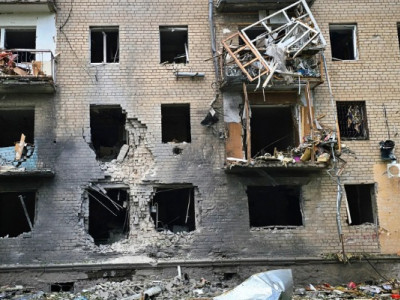
In the report, the commission emphasized that the continuous attacks on Ukraine's energy infrastructure constitute crimes against humanity in the form of other inhumane acts. The findings are based on an investigation into the impact of Russian strikes on civilians, as well as the circumstances surrounding the recruitment of men from other countries into the Russian army.
The commission examined the impact of large-scale attacks by Russian armed forces on Ukraine's energy infrastructure, particularly the situation of civilians during the harsh winter of 2025-2026. It also assessed the cumulative effects of such strikes carried out since autumn 2022.
According to the commission, successive waves of Russian attacks have become increasingly frequent and intense. During these attacks, Russian forces used hundreds of drones and missiles simultaneously, while the geographical scope of the strikes continued to expand. As a result, Ukraine's energy sector sustained extensive damage.
Last winter, when temperatures fell to -21°C, millions of Ukrainians faced prolonged disruptions to heating, electricity, water and gas supplies. People were forced to live in conditions that severely disrupted daily life and threatened their health.
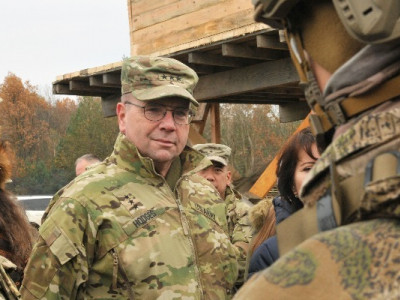
Commission Chair Erik Møse said that, as another winter approaches, Russian attacks have once again become more frequent.
"This is a matter of serious concern given the threats to the lives and health of civilians," he said.
The report emphasizes that prolonged exposure to cold, lack of access to essential utilities and the constant need to find ways to survive had a significant impact on civilians' physical and mental health.
Power outages left people in situations that limited their ability to protect themselves from shelling. For example, fearing they might become trapped in an elevator during a sudden power cut, some people were unable to go down to shelters during air raid alerts. As a result, they had to remain in unheated homes without electricity or water. Some also lacked access to life-support equipment and basic services.
The energy crisis also affected children. Prolonged school closures prevented them from studying properly. Meanwhile, the lack of heating in homes led to illnesses among children and created additional difficulties for their families.
Based on its investigation, the commission concluded that the Russian authorities had committed war crimes by deliberately directing attacks against civilian objects.
The evidence gathered indicates that the strikes on Ukraine's energy infrastructure were deliberate and carried out as part of state policy. The aim was to deprive civilians of electricity and other essential services that depend on energy supplies, as well as to inflict suffering on the population.
The commission also concluded that the Russian authorities had committed crimes against humanity in the form of other inhumane acts.
The investigation drew on testimony from 255 people who had endured the winter in the conditions described. They lived in Dnipropetrovsk, Kyiv, Kharkiv, Kherson, Mykolaiv, Odesa, Poltava, Zaporizhzhia and Zhytomyr regions.
In addition to testimonies from those affected, the commission used information provided by Ukrainian authorities, doctors and non-governmental organizations.
The report also focuses on Russian commanders' awareness of the consequences of the strikes. According to the commission, commanders who ordered the attacks knew that the heating facilities they targeted in large population centres were essential to civilians, particularly during winter.
Furthermore, Russian authorities publicly declared their intention to continue the attacks and referred to plans to carry them out.
As part of its investigation, the commission also examined attacks by Ukrainian armed forces on energy facilities in Russia and in temporarily occupied territories of Ukraine.
However, the commission was unable to investigate the consequences of these strikes in detail. Russia denied it access to the relevant territories and did not respond to requests for the necessary information.
Another focus of the investigation was the recruitment of foreign nationals into the Russian armed forces. The commission concluded that the Russian authorities had recruited men who had become victims of human trafficking in countries around the world, in violation of international human rights law.
The investigation uncovered compelling evidence that the Russian authorities had engaged in human trafficking involving people from 29 countries.
Recruitment involved deception and coercion, with agents and agencies operating in various countries. These intermediaries presented themselves as legitimate companies or businesses allegedly backed by governments.
They arranged visas and travel documents for groups of recruited men. In some cases, agents accompanied them on their journeys.
However, shortly after arriving in Russia, the men were forced to sign contracts with the Russian Ministry of Defence. The documents were written in Russian.
The commission noted a high degree of coordination between agents operating in different countries and the Russian authorities.
After signing the contracts, the men were sent to the front line in Ukraine and assigned dangerous tasks. Many were killed or went missing. Others surrendered voluntarily or were captured by the Ukrainian armed forces, subsequently becoming prisoners of war.
The UN commission reiterated that international law prohibits attacks on civilians and civilian objects, and called for such attacks to stop.
The commission also called for all victims of human trafficking to be released from the Russian armed forces.
Background
As of April 2026, Russian forces had attacked Ukrainian electrical substations 155 times since the start of the full-scale invasion. These substations are critically important for nuclear safety.
Since October 19, 2026, Russian forces have carried out around 60 targeted strikes, damaging energy and oil and gas infrastructure in several Ukrainian regions, including Rivne, Volyn, Khmelnytskyi and Vinnytsia regions. The Kyiv energy hub was also hit.
As of May 2026, 80 repeat strikes on infrastructure sites while State Emergency Service of Ukraine rescuers and law enforcement officers were arriving at the scene had been recorded.
As Rubryka previously reported, Russia is preparing to intensify its attacks on Ukraine's critical infrastructure in autumn and winter and is already trying to justify the campaign in advance. Russia's Ministry of Defence has described the planned attacks as a "response" to Ukrainian strikes on Russian targets.
On September 30, Serhii Koretskyi said that Russian forces had shifted to massive strikes against energy facilities. Among the sites damaged was the Trypillia Thermal Power Plant in Kyiv region.
Russia launched its next attack on energy infrastructure on October 14, targeting all three of Kyiv's combined heat and power plants and energy facilities in Kharkiv region. Thus, ahead of the heating season, Russian forces stepped up pressure on Ukraine's energy system.
In addition, on the night of October 23, Russian forces launched a massive attack on one of DTEK's thermal power plants. The attack forced the plant to halt electricity generation and caused significant damage to its equipment.
- Last
- October, 27
-
-
-
-
-
-
-
-
-
-
-
-
-
-
-
-
-
-
-
News by day
28 of October 2026