“Ukraine’s Army Will Become One Of Europe’s Main Pillars”: NATO Admiral On The Lessons Of Russia’s War

Five years of full-scale war, which Russia expected to end in a matter of days, have changed not only Ukraine but the entire European security system. Ukraine’s army has proven its ability to withstand Russian aggression, and the experience of this war has forced NATO to rethink its approach to modern warfare, defense, and military planning.
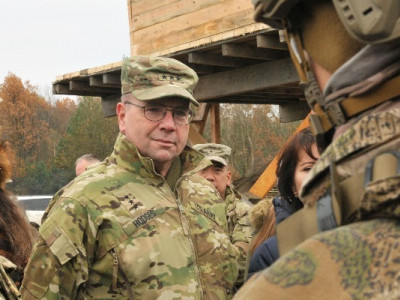
How does the Alliance assess the threat from Russia today? What are the main lessons NATO has drawn from the war in Ukraine? Why does air defense remain one of the key priorities? And what role will Ukraine’s army play in ensuring Europe’s security after the war ends? Admiral Giuseppe Cavo Dragone, Chair of the NATO Military Committee, spoke about this in an interview with UATV English.
— In a few months it will be five years since the start of Russia’s full-scale invasion of Ukraine. How do you assess the country’s future after more than four years of war? What is the main result Ukraine has managed to achieve?
— Four years ago, in February 2022, various world capitals were asking: how many days — not weeks, but days — would Ukraine hold out?
That question we asked ourselves back then looks simply absurd today. Ukraine exists, decides its own future, and has forced the whole world to treat it with enormous respect — as an extremely important actor.
And that isn’t a gift of fate. Ukraine earned that right on the battlefield, achieved it itself.
— How much has NATO’s assessment of the threat from Russia changed over the past two years? Does Russia today pose a threat exclusively to Ukraine, or should it be viewed as a strategic threat to all of Europe?
— A threat can’t be assessed solely by where the missiles land. Capabilities, intentions, and prior actions all need to be taken into account.
History is the past. Four years ago, a significant part of Europe could regard the war unleashed by Russia as some kind of border issue. Today that’s no longer the case. Drones are flying in European skies, cables are being cut on the seabed, acts of sabotage, interference, and arson are occurring.
Ukrainians understood this first and, of course, paid a price for it that none of the rest of us have paid. We realized this later — quite recently, in fact.
But fortunately, we understand this now. And that’s a very important, fundamental moment.
— What is being done to protect Europe from this threat?
— The experience gained on the Ukrainian theater of war shows: whoever learns fastest wins.
In this war we’ve seen that the adaptation cycle is measured in weeks. In modern warfare, even an effective system can become unusable within a few months. For armies like ours, which have always been accustomed to planning decades ahead, this is a genuine revolution.
But before it became a technological revolution, it was a cultural one. There’s another lesson that may be less exciting, but is just as important and lasting.
Today, quantity still matters. Quality cannot fully replace quantity, especially when it comes to real resource consumption in the conditions of a high-intensity war like the one we’re seeing now.
Ukrainians have taught us both these lessons in practice, and paid a heavy price for them.
— The war in Ukraine is probably changing the ways combat operations are conducted faster than any other conflict in recent decades. What is the most important military lesson NATO has drawn from Ukraine’s experience?
— Air defense is essential. Interceptors are especially important. But if all we have are interceptors — those are empty shells; we also need missiles.
There’s another point that we military people sometimes tend to underestimate, though it’s no less important. It concerns protecting the power grid.
In Ukraine, this is an extremely important task in every respect.
By striking power plants, the Russians aren’t just trying to destroy transformers. They’re deliberately trying to break the people’s will by plunging them into darkness and cold. Protecting the energy grid means protecting the will to resist and survive.
— If you had to name just one type of military capability the West should provide Ukraine as quickly as possible before autumn and winter arrive, what would it be?
— Air defense. President Volodymyr Zelenskyy has repeatedly emphasized this point himself. Interceptors are needed, and in large numbers, since the number of systems carrying out strikes is enormous.
We need to ensure that the systems we use to intercept numerous cheap, high-intensity attacks are cost-effective.
These should be simple systems, but ones with operational capability and the ability to withstand a huge volume of strikes. That’s why this particular system should take priority over everything else, and the Alliance’s countries are focusing enormous attention on it.
— Let’s imagine Ukraine after the war ends. What role should Ukraine’s army play in ensuring European security? Could it become one of the pillars of defense on Europe’s eastern flank?
— For a long time we talked about Ukraine as a country receiving assistance.
Today we see in practice that Ukraine is providing both its own security and ours. It is a guarantor of security, not merely a recipient of it.
When the war ends — we hope this happens soon — and ends with a just peace for Ukraine, it will possess the only army in Europe with real experience of waging high-intensity combat against a strong, equal adversary.
No other European army has this kind of experience. And none of us wants to acquire that experience the way Ukrainians acquired it. A strong and armed Ukraine poses absolutely no threat to European security. I consider it one of its main pillars.
“Russia Was Counting On Us Tiring First”
— Ukraine has proven it’s ready to fight and pay an enormous price for its freedom. Many of the country’s citizens are asking themselves: to what extent is Europe ready to keep supporting Ukraine?
— Europe has already proven this. I think this question is quite justified, especially at this stage of the fighting. However, this isn’t the end. We fully understood that Moscow made a calculation from the very start. It was that we would tire first. They built their entire strategy on this mistaken bet.
For four years now, they’ve been failing. Support hasn’t just been maintained, it’s expanded. We’ve gained two new allies. Our defense spending has reached a level we couldn’t even have imagined in 2021.
Today we see that those who bet on our exhaustion have miscalculated dramatically.
“After A Trip To Kyiv, It’s Impossible To Look At The War With The Same Eyes”
— You’ve visited Kyiv during the war and personally witnessed the consequences of Russian attacks on civilians. Do such visits change command’s approach to Russia’s war against Ukraine?
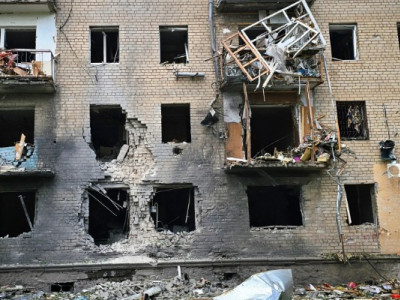
— I’ve been to Kyiv many times already. This is part of the normal dynamics of preparation and planning. You arrive in a city that’s been under shelling all night, you see how the population sheltered in bunkers and, evidently, didn’t sleep.
But in the morning, people get up and go to work.
Honestly, you get something that no journalistic article can convey. The siren, which sounds constantly — and not just once — has become an everyday reality. That’s exactly what we take away with us when we visit Ukraine. It radically changes how we formulate our military assessments.
“Independence Is The Right To Choose Your Own Future”
— What does Ukraine’s independence mean to you personally?
— My country, although it gained independence long ago, paid a high price for it. There are generations who, fortunately, won’t have to go through that experience.
And freedom wasn’t handed to us by events and history either. It had to be paid for. Now we enjoy that freedom.
As for Ukraine’s independence, it’s simply a people’s right to decide for themselves whose side to be on, where to go, and who to be. It’s one of the simplest rights imaginable. And it’s exactly this right that Ukrainians continue to fight for.
“You Are Not Alone, We Are On Your Side”
— Ukraine made its choice 35 years ago. Ukraine is a free and sovereign state. If you could leave a message today for the Ukrainian people, what would it be?
— Today we all look at you with boundless respect.
This respect is different from what we’re used to. It was earned in battle. Over four years, you’ve defended not just your territory. You’ve defended an idea that concerns us as well.
It’s a fundamental idea that we perhaps hadn’t thought about before. Borders cannot be moved by force, and no people can be influenced from outside. And my message is simple: you are not alone. We are on your side.
Read also: Is NATO Ready to Defend the Baltic States If Moscow Crosses the Border? — Interview with Glen Grant
- Last
-
-
-
-
-
-
-
-
-
-
-
-
-
-
-
-
-
-
- September, 01
-
News by day
2 of September 2026