Why Poles are becoming more radicalised toward Ukrainians and what is driving it

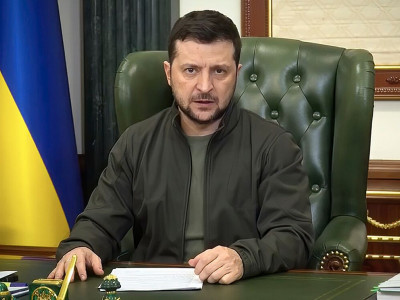
The controversy sparked by President Zelenskyy’s decree honoring the "heroes of the UPA" is evolving in Poland into a broader anti-Ukrainian discourse marked by hostility, resentment and a sense of superiority. The situation poses a serious threat to bilateral relations and regional security.
Some politicians have proposed suspending all assistance to Ukraine until Kyiv officially labels the Ukrainian Insurgent Army (UPA) as criminal and removes it from its historical policy. [The UPA, or Ukrainian Insurgent Army, was a nationalist paramilitary organisation that fought for Ukrainian independence during and after World War II, primarily against Nazi Germany and the Soviet Union – ed.]
Others have even suggested closing the airport in Rzeszów, through which Ukraine’s allies deliver military aid.
Read more about the roots of this trend and its possible consequences for both countries in the article by Olha Popovych of Ukrainian Almanac (published by the Association of Ukrainians in Poland): The end of the Poland that surprised us in 2022: What lies behind Polish outrage over the decree honoring UPA heroes.
Various theories are circulating in Poland regarding President Volodymyr Zelenskyy’s decision to name a Special Operations Forces training center after UPA heroes.
Some argue that the decision was intended to boost the president’s popularity among military personnel and voters in western Ukraine.
Others suggest it was an attempt to distract public attention from corruption scandals involving people in his political circle.
Meanwhile, former Polish diplomat and commentator Witold Jurasz claimed that the decision reflected Ukraine’s "Soviet mentality" – the idea that Ukrainians only respect strength. Since Zelenskyy supposedly sees Poland as a weak state, he therefore feels no need to take Polish concerns into account.
As these examples demonstrate, many interpretations are characterised by a pronounced Polonocentrism, which does little to encourage an objective assessment of the situation.
These explanations are based on a failure to recognise the profound changes that have taken place in Ukrainian society over the past five years and on a misunderstanding of the reality in which Ukraine now exists.
This includes the fact that Ukrainians’ attitudes towards the history of the OUN and UPA have changed significantly since the beginning of Russia’s aggression.
Since February 2022, opinion polls have shown that a large majority of Ukrainians are familiar with the UPA and view its recognition as a movement that fought for Ukraine’s independence positively. In Ukraine’s historical policy, there is a strong emphasis on the fact that the insurgents fought against both the communist and Nazi regimes, which has also contributed to a more favourable public perception of the UPA.
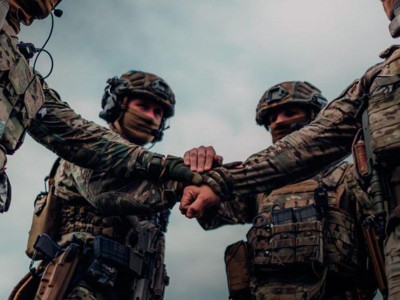
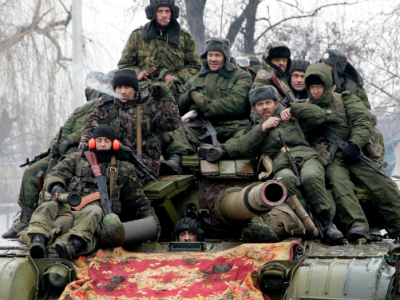
The Armed Forces of Ukraine include people with a wide range of worldviews and interpretations of history. However, for many service members, it is important to understand that the country they are defending has its own military and resistance tradition. A key part of that tradition is the UPA’s long struggle against the Soviet system.
The fact that a Ukrainian military unit wanted to bear the name of UPA heroes, and that President Volodymyr Zelenskyy approved that request, simply reflects contemporary Ukrainian realities. According to the author, there is no hidden agenda behind it, contrary to what many in Poland mistakenly believe.
In June 2022, Ukraine and Poland reached an understanding at the presidential level and among relevant institutions to avoid discussing divisive historical issues until the end of the war, precisely because such topics had repeatedly generated tensions.
Today, however, that informal understanding is rarely mentioned, particularly within Polish expert circles. Instead, narratives about "ungrateful Ukrainians" and "UPA criminals" have increasingly merged into a single political message.
Meanwhile, Polish society is becoming more radicalised on the issue.
The continuous repetition of a single dominant historical narrative influences not only radical groups but also more moderate citizens.
As Ukraine increasingly evolves from an object of international politics into an independent subject capable of pursuing its own policies, Polish reactions to Ukrainian commemorations of the OUN and UPA may become stronger and more confrontational. There are always fewer demands placed on an object than on a subject, because a subject can become a competitor and pursue its own political agenda.
Both countries may end up paying an extremely high price if this cycle of hostility and resentment is not brought to a halt. For the phrase "Without a free Ukraine, there can be no free Poland" is not merely a beautiful slogan, it is a reality in which we have lived in the past and continue to live today.
- Last
- June, 22
-
-
-
-
-
-
-
-
-
-
-
-
-
-
-
-
-
-
-
News by day
23 of June 2026