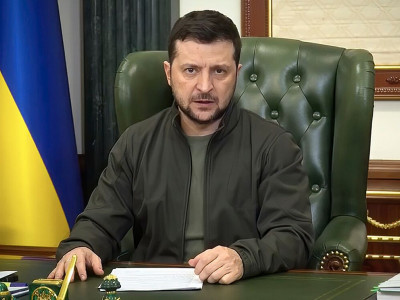
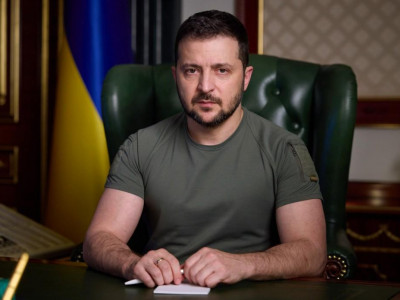
Zelenskyy should travel to Gdańsk despite the crisis. Ukraine needs it and here is why

Ukrainian-Polish relations are experiencing their deepest crisis in many years.
Polish President Karol Nawrocki’s decision to "punish" the President of Ukraine, and the subsequent mass refusal by Ukrainian politicians and diplomats to accept Polish state honours, are not the cause of this crisis. They are merely one of its manifestations, an illustration of it.
This is not about awards. We are truly heading towards the abyss.
Voices in Warsaw are even publicly threatening to halt military supplies to Ukraine. Such a scenario remains unlikely (at least for now), but at stake is, at a minimum, Ukraine's accession to the EU. Yet even that high price does not make Kyiv’s room for concessions unlimited. There are red lines that the Ukrainian authorities will certainly not cross.
Ukraine’s friends in Poland become even more important than usual under these circumstances.
Poland’s political arena is filled with anti-Ukrainian narratives and xenophobia. Attempts to explain Ukraine’s motives to politicians often become grounds for harassment and attacks. Despite this, there are still healthy forces in Poland. There are politicians who are trying to prevent further deterioration in relations with Ukraine. Prime Minister Donald Tusk is among them. Therefore, it is critically important that Kyiv’s actions take into account the interests of those in Poland who continue to stand on the side of common sense.
For now, and precisely for these reasons, the official reaction from Kyiv to Nawrocki’s attack has been broadly correct. The order (decoration) had to be returned to Warsaw.
But for the very same reasons, President Zelenskyy should travel to Poland this week.
Because his visit would help Ukraine’s friends. Refusing to go would help anti-Ukrainian politicians.
This article is an Editorial. That means it is published on behalf of the entire editorial team and reflects the collective position of all European Pravda journalists. We reserve this format for truly exceptional cases, particularly when Ukraine finds itself at an important crossroads. Given that the Presidential Office is reportedly weighing the possibility of declining participation in the Ukraine Recovery Conference (URC) in Gdańsk, this is precisely such a situation.
We will also explain in this article why the European Pravda editorial board considers the "order-fall" – the return of Polish state decorations by Ukrainian politicians and diplomats – to be necessary. Even more importantly, this unprecedented step, taken without any directives or coordination, was undertaken not only by representatives of the current government but also by its opponents.
This demonstrates the existence of the red lines mentioned above – red lines that are not obvious to Poland.
First, let us address something that the official authorities in Kyiv know perfectly well, and that we at European Pravda have written about many times. It is nevertheless important for understanding the current situation.
The "Ukrainian question" has long become an instrument of domestic politics in Poland. The reason is simple: playing against Ukraine brings electoral dividends.
This trend has evolved into a self-reinforcing spiral.
Opinion polls consistently show that negative attitudes towards Ukrainians dominate in Poland, especially among right-wing voters (who constitute the majority of the electorate), and the trend is worsening. As a result, criticism of Ukraine, the UPA or Bandera [The Ukrainian Insurgent Army, or UPA, was a nationalist paramilitary organisation that fought for Ukrainian independence during and after World War II, primarily against Nazi Germany and the Soviet Union] has become a necessary element of almost every right-wing politician’s campaign.
These politicians do not hesitate to play the Ukrainian card – often relying on myths, half-truths or outright falsehoods.
In turn, anti-Ukrainian statements by politicians normalise such rhetoric and further worsen public attitudes towards Ukrainians. The cycle is complete.
This game is not played only by the far-right (it is enough to recall the anti-Ukrainian remarks made by the liberal politician Rafał Trzaskowski during the 2025 election campaign).
However, in the Nawrocki–Tusk rivalry, the division of roles is particularly clear.
For Nawrocki, attacks on Ukraine are a tool in his struggle against Donald Tusk.
For example, if the Polish prime minister does not sufficiently support criticism of Ukraine initiated by the president, that can be used to accuse him of being "pro-Ukrainian". In contemporary Poland, such an accusation is increasingly becoming a political stigma for nationally prominent politicians.
The story surrounding the Order of the White Eagle is a perfect example of this dynamic, as European Pravda previously explained in the article. When Karol Nawrocki signed the decree stripping Volodymyr Zelenskyy of the Order, it was important to him not only to punish his Ukrainian counterpart. More importantly, he needed to send the decree to Tusk for countersignature, knowing that the prime minister opposed the punishment of the Ukrainian president.
Every day that passed without Tusk’s signature gave Nawrocki an opportunity to attack him, accusing him of tolerating the crimes committed in Volhynia in 1943, and so on. This is precisely why Zelenskyy’s decision to return the order to Warsaw was the correct one: it removes the political need for Tusk’s signature and minimises the political damage to him.
That said, the decoration did not necessarily have to be sent back via Nova Poshta [the Ukrainian postal service]; other channels existed. But politics is rarely devoid of an element of theater.
However, Zelenskyy’s loss of the decoration does not bring this story to an end.
The crisis has not disappeared. It has only become more acute. And the Presidential Office in Kyiv is fully aware of its depth. Among other signs of this, since early June Zelenskyy has stopped using Rzeszów Airport for his foreign trips. During a period of interstate tensions, relying on Polish transit would appear odd and would further underscore Kyiv’s dependence on Poland.
Nevertheless, Zelenskyy had planned to make an exception for a trip to Gdańsk, given the importance of the Ukraine Recovery Conference (URC 2026) – the annual international forum on Ukraine, whose organisation this year was undertaken by Poland.
However, after the withdrawal of the decoration, Kyiv began considering whether to cancel even that exception.
Indeed, over the weekend, Foreign Minister Andrii Sybiha stated that Zelenskyy might decline to travel to Gdańsk.
In other words, Ukraine could choose to punish Poland in return.
Because Zelenskyy’s refusal to attend the conference would indeed constitute a form of punishment. There is a high probability that it would lead to a lower level of participation by other countries. At present, however, participation is expected to be at the highest level. According to preliminary information, German Chancellor Friedrich Merz and European Commission President Ursula von der Leyen are planning to attend.
Moreover, there was even a worst-case scenario in which all of Ukraine’s top government officials would announce that they could not attend the conference, effectively stripping the event of its purpose.
Poland seeks international leadership on Ukrainian issues and is frustrated by its inability to fully achieve that goal. Even the "lighter" version of such a response would amount to a slap in the face of the Polish government from official Kyiv.
And the word "government" is the key point here.
The Gdańsk conference is a project of the Polish government and personally of Donald Tusk. It was Tusk who negotiated the participation of top European leaders.
Therefore, its disruption or failure would be a failure for Tusk. It would also become another argument for anti-Ukrainian forces in Warsaw to speak about Kyiv’s "ingratitude", allegedly isolating Poland from European discussions on aid to Ukraine.
In addition, Zelenskyy’s refusal to travel to Gdańsk would be perceived in Poland as a sign of Kyiv’s weakness.
Thus, such a response from Kyiv would be the best possible gift for Nawrocki and it is quite likely that this is exactly what he is hoping for. There is even a not-unfounded view that the attempt to derail the URC may have been one of the motives behind Nawrocki’s decision to sign the White Eagle decree at this very moment.
So, should Ukraine really give Nawrocki such a gift?
This is a rhetorical question.
But an important point must be added: decisions regarding Poland should be based on two factors.
The first is Ukraine’s interest: does a given action bring strategic benefit to Ukraine?
The second is the interest of those forces and politicians in Poland who are friendly to Ukraine. If Ukraine acts without considering their position, it will only strengthen anti-Ukrainian forces and ultimately harm itself.
Both of these considerations mean that Zelenskyy should go to Gdańsk and maintain Poland’s government engagement in Ukrainian affairs. Politics is not the place where emotional decisions are the best ones.
But this also means that, despite all of Nawrocki’s outrageous behaviour, Zelenskyy should also seek a meeting with him.
As already mentioned, themes such as the UPA, Bandera and "Ukraine's ingratitude" in Poland have long become part of domestic political struggle, where Ukraine is treated as an object.
But this does not negate the fact that, for Polish voters, the issue of the UPA is indeed highly sensitive.
The reason is that Poland largely lives within a historical myth about the events of the first half of the last century. In the interpretation close to Nawrocki, to the entire right-wing, and to Polish historiography in general, Poland during the interwar period and World War II was exclusively an innocent victim.
There was no Polish occupation of Ukraine. There were no ethnically motivated crimes by Poles against the Ukrainian p
- Last
- June, 22
-
-
-
-
-
-
-
-
-
-
-
-
-
-
-
-
-
-
-
News by day
23 of June 2026