How EU Plans to integrate the Western Balkans and which country is leading the race

On 5 June, the latest EU-Western Balkans summit took place in the Montenegrin city of Tivat.
Significantly, participants agreed not to produce a final joint declaration.
This is often what happens when it proves impossible to find wording acceptable to all sides. As a result, discussions were exceptionally frank and, at times, uncomfortable for some participants.
Read more about the summit messages, held against a backdrop of regional instability and geopolitical tensions, in the article by Western Balkans expert Volodymyr Tsybulnyk: An accession date for Montenegro, a new plan for others: EU-Western Balkans summit turns geopolitical.
The spotlight was on Montenegro, which recently celebrated the 20th anniversary of the restoration of its independence. Montenegro is the country closest to joining the European Union today. European Commission President Ursula von der Leyen stated that accession could take place as early as 2028.
A working group to prepare Montenegro’s Accession Treaty has been established.
At the same time, the country must still complete the necessary reforms. Without them, it will be impossible to close the remaining negotiation chapters.
A considerable amount of work remains, and meeting all requirements within a short period will be difficult.
Interestingly, many of these challenges are familiar to Ukraine. They largely concern Chapters 23 and 24 of the accession negotiations – the Fundamentals cluster, which Ukraine is set to open in Luxembourg next week.
Nevertheless, Montenegro’s President Jakov Milatović confidently declared: "Montenegro is ready for the final step towards EU membership".
It is worth remembering that Montenegro’s accession negotiations began back in 2012.
Meanwhile, neighbouring Croatia warned before the summit that several unresolved bilateral issues remain obstacles to Montenegro’s EU membership. These include the demarcation of the maritime border, compensation for Croatian prisoners held in the Morinj detention camp and ownership disputes surrounding the historic sailing ship Jadran.
The first E-Western Balkans summit took place in a relatively calm regional environment. The same cannot be said today.
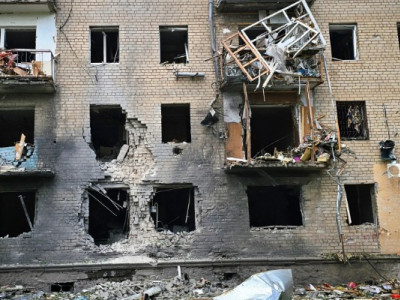
Serbia and Croatia have entered a potentially dangerous arms race.
In Bosnia and Herzegovina, political disputes continue to prevent the appointment of a new High Representative, while separatist forces remain active.
In Albania, protests against the construction of a luxury resort by Jared Kushner on the protected island of Sazan Island have intensified and become increasingly politicised, amid allegations of violations of national legislation.
Regional stability has also been complicated by the recently unveiled US strategy for the Western Balkans, which has raised numerous questions.
Meanwhile, new elections in Kosovo are unlikely to resolve the country’s political deadlock or bring greater stability.
Adding to the already tense regional backdrop was growing geopolitical competition.
German Chancellor Friedrich Merz used his speech to urge Serbian President Aleksandar Vučić to stop balancing between Russia, China and Europe and finally make a clear choice in favour of a European future.
Other EU leaders echoed this message.
Participants also emphasised that, amid global challenges, integrating the Western Balkans into the EU is increasingly viewed as a strategic investment in the security and stability of the entire continent, not merely the region.
The summit’s most significant development was the presentation of a strategy for the gradual integration of the Western Balkans and Moldova into the EU before full membership.
The initiative was unveiled by the leaders of France and Germany.
Some of the proposals are already familiar to Ukraine, having been discussed during the recent visit to Kyiv by EU Enlargement Commissioner Marta Kos.
Ukraine was also mentioned during the summit in Tivat.
EU Enlargement Commissioner Marta Kos stated that Ukraine, despite the ongoing war, has made "dynamic progress" compared to the countries of the Western Balkans. According to Kos, this provides grounds for believing that "Ukraine could be ready to join the European Union by 2030", she told reporters at a briefing.
- Last
- June, 22
-
-
-
-
-
-
-
-
-
-
-
-
-
-
-
-
-
-
-
News by day
23 of June 2026