Our website uses cookies to provide your browsing experience and relevant information. Before continuing to use our website, you agree & accept our Cookie Policy & Privacy.
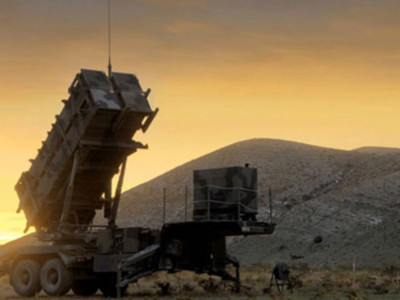
The United States is currently finalizing plans to send the first battery of the Patriot air defense system to Ukraine. Let’s take a closer look at this missile system.
The transfer of this system is both a confirmation of the unwavering US commitment to supporting Ukraine and a significant improvement in the capabilities and potential of the Ukrainian air defense system. At the same time, this step raises several questions, such as the need for intensive training of the Ukrainian military in the use of these systems, the prospects for long-term sustainment of the unit, and the short- and long-term implications for US air defense. In addition, the transfer of one battery of the Patriot air defense missile system will not radically change the situation, as its use is limited by the area it can cover and the high cost of interceptors. But it is a good signal for Ukraine, for its air defense, and a further impetus for cooperation with other Western partners.
The Patriot system is part of a $1.8 billion aid package to Ukraine that was announced during Ukrainian President Volodymyr Zelenskyy’s recent visit to Washington, D.C., to meet with President Biden and other officials.
Readers of a certain age may remember first hearing about Patriot missiles during the 1991 Gulf War, when the missile system effectively shot down Iraqi Scud missiles in defense of Israel.
The Patriot is one of the most sought-after air defense systems on the American arms market, and is currently in service with Saudi Arabia, the Emirates, and NATO allies in Europe. Israel still uses it. Now we can add Ukraine to this list.
So, first things first.
Read also: Weapon of Ukrainian victory: Review of the Marder infantry fighting vehicle
The Patriot is a long-range mobile air and missile defense system capable of shooting down targets at any altitude, in any weather conditions, and designed to combat tactical ballistic missiles, cruise missiles, and aircraft. Mounted on trucks, each system is capable of holding four interceptor missiles that can be moved at will. The system is manufactured by Raytheon in Massachusetts and Lockheed Martin Missiles and Fire Control in Florida.
First deployed in the 1980s, Patriot has become the workhorse of the US Army’s air and missile defense, a key element of its power and a major symbol of US commitment to allies and partners. Unlike a single missile system, the Patriot includes a family of elements, control units, radars, a family of interceptors, and other support equipment. The Patriot is in service with the United States and allied countries, including Germany, Greece, Israel, Japan, Kuwait, the Netherlands, Saudi Arabia, South Korea, Poland, Sweden, Qatar, the United Arab Emirates, Romania, Spain, and Taiwan. Ukraine will soon join them.
The word Patriot is an abbreviation for Phased Array Tracking Radar for Intercept on Target. This name was given to the missile system in 1976, but it was previously known as SAM-D. This program dates back to the 1960s and was intended to replace or supplement the HAWK and Nike-Hercules air defense systems.
The US Armed Forces have used Patriot batteries in numerous conflicts over the past 30 years.
Read also: Weapons of Ukrainian Victory: BAE Systems CV90 infantry fighting vehicle
The Patriot air defense missile system is used to cover large administrative and industrial centers, naval and air bases from all existing air attack assets in the face of powerful enemy electronic countermeasures. The complex is capable of simultaneously detecting and identifying more than 100 air targets, continuously tracking eight selected targets, preparing basic data for firing, launching and guiding up to three missiles at each target.
An anti-aircraft battery includes 4-8 launchers with four missiles each. The battery is the minimum tactical fire unit that can independently perform a combat mission. The battery is most often used as part of a division.
The Patriot missile system has high combat capabilities. The effectiveness of the system is achieved due to its construction on the basis of advanced circuitry solutions, the use of modern materials and advanced technologies in the systems and components of the missile system.
The main technical solutions that characterize SAM systems include:
Read also: Weapons of Ukrainian victory: ATGM Stugna-P – Russian tanks are in trouble
The development of the system began in 1963 to replace the previous generation of air defense systems. The first flight test of the missile took place in February 1970, and on January 11, 1974, the missile first performed guidance maneuvers based on commands received from ground-based radar.
Since 1983, these air defense systems have been in service with the U.S. Army and have been supplied to America’s NATO allies, as well as Israel, Saudi Arabia, and Japan. Patriot became widely known during the Gulf War. And not even because it proved to be a reliable air defense system. According to the manufacturer, sales after that war amounted to about $3 billion.
During the Gulf War, the Patriot air defense system was used to combat Iraqi Scud tactical missiles. Warnings about the missile launch and its flight path came from a reconnaissance satellite. This data had to be received at least 90 seconds before the warhead appeared on the radar screen. As a rule, the interception was carried out at altitudes of 5-10 km at a distance of 7-15 km from the battery position. Sometimes the warhead was not destroyed completely, but only changed its flight path. Also, the target could be hit by fragments of the destroyed warhead due to the proximity of the interception point. In real combat conditions, the effectiveness of the systems was almost the same as during the range tests: the probability of hitting the target ranged from 0.6 (according to the Pentagon) to 0.8-0.95.
The purpose of the Patriot modernization was to adapt the air defense system to protect small areas from ballistic missile attacks. The task of this version of the air defense battery was not only to ensure that a tactical ballistic missile was deflected from its target, but also to destroy it. For this purpose, the software was modified, which also made it possible to combine the work of three Hawk and Patriot SAMs under the control of a single fire control center. During the modernization, the warhead of the missile was improved and a new fuze was installed, increasing the weight of the missiles. These changes did not affect the effectiveness of the missile when firing at aerodynamic targets and subsequently became standard for all modernized missiles.
A variant of the PAC-2 was tested at the White Sands test site in November 1987, with a modified Patriot missile hitting another Patriot missile that simulated a Soviet SS-23 ballistic missile.
As part of the second stage of modernization of the RAS-2 in the early 1990s, the GEM (Guidance Enhanced Missile) program developed a missile with an improved guidance system that included an advanced radio detonator. This improved the Patriot’s ballistic missile interception capabilities.
At the same time, the new QRP (Quick Response Program) program provided for the modification of the AN/MPQ-53 radar software to improve its capabilities in intercepting ballistic missiles. According to Reitheon specialists, this allowed to increase the Patriot battery’s defense zone against such missiles by 4 times compared to the RAC-1 version.
Raytheon has proposed another modernization of the Patriot system, creating a new version of the missile, designated as RAS-2 Hit-to-Kill. The proposal for this upgrade was made in order to give the first versions of the system in service a direct hit capability similar to the RAS-3 missile, as well as to increase their strike capability.
The modernization included replacing the passive COS of the existing PAF-2 missiles with an active Ku-band one, replacing the high-explosive warhead and introducing a special propulsion system, as well as upgrading the missile’s software. The new components provide the missile with the ability to maneuver from targeting to collision with the target, as well as to destroy attacking ballistic and cruise missiles, aircraft and UAVs. The choice of RAS-2 for these purposes is due to its greater range and altitude compared to RAS-3.
Together with the RAF-3, the Hit-to-Kill missile can ensure the operation of Patriot systems until 2028. The US Army’s SLEP program will include the modernization of the RAF-2 and PAC-2GEM missile variants to the PAC-2GEM+ configuration. This option will include a high-explosive warhead, an advanced in-flight reprogrammable radio fuze, and a surface acoustic generator to increase the effectiveness of countering cruise missiles.
The PAC-3 is another modernization of the Patriot, which has improved ballistic missile defense capabilities. Almost all aspects of the system have been updated. The new MIM-104F missile was introduced. It is much smaller than the old Patriot missiles. Four missiles are transported in one container. Thus, one launcher has 16 missiles instead of 4. The missile has a range of about 40 km and a flight altitude of 20 km. The radar has received an increased detection and tracking range.
Read also: Silent killers of modern warfare: most dangerous military UAVs
The Patriot missile system includes:
Read also: “Neptunes” knocked out “Moskva” cruiser: All about these anti-ship cruise missiles
The MIM-104A missile used in the Patriot is a single-stage guided missile with a conventional aerodynamic design. The missile consists of the following compartments (from the nose to the tail): fairing, homing head, warhead, engine, control system (control unit, 4 transverse stabilizers and 4 rudders with hydraulic drives).
The airfoil protects the homing head from high aerodynamic loads and heat fluxes at hypersonic flow rates. The fairing itself is made of a ceramic alloy by special casting. Its nose part is covered with cobalt alloy. Th