Ceasefire First, Territory Last: The Sequence That Could Shape Peace in Ukraine

For Ukraine, what matters most in the diplomatic track is not only what is promised, but the order in which those promises are implemented
The diplomatic track is moving again. U.S. envoys Steve Witkoff and Jared Kushner met Russian dictator Vladimir Putin in Moscow, then travelled to Kyiv by train and held three rounds of talks with President Volodymyr Zelenskyy, with national security advisers from Britain, France and Germany joining for part of the discussions.
Witkoff said the Americans had heard new ideas in Moscow, and Kushner said he had been tasked with assembling a peace package, while both pushed for a return to trilateral talks. Nothing was agreed. What has changed is that the debate has narrowed: from whether negotiations should take place to the sequence in which any steps would be taken. For Ukraine, that sequence may prove decisive.
Read the FULL article by Bohdan Popov, Head of Digital at the United Ukraine Think Tank, communications specialist and public figure.
Popov lays out the current state of play, noting Zelenskyy met Trump on September 22 on the margins of the UN General Assembly — their first face-to-face meeting since July — after which Zelenskyy said Kyiv was ready for any form of energy ceasefire, provided Russia stopped striking electricity, heating, and water infrastructure. He adds that Zelenskyy also asked Trump to convene a trilateral meeting, raised the need for a winter air-defense package and licenses for domestic Patriot production, and warned that Russia was preparing a new large-scale attack. The expert notes that the following day, Marco Rubio met Sergei Lavrov in New York and stressed both sides had shown interest in a limited ceasefire covering energy and grain infrastructure, while France told the Security Council it backed moratoriums on strikes against energy facilities and Black Sea shipping.
Popov argues Moscow’s actual response was less accommodating than the headlines suggested, citing Dmitry Peskov’s statement that there were no grounds for peace talks and that a leaders’ meeting before expert-level discussions would be pointless. He notes the Kremlin, while welcoming the idea of an energy moratorium in principle, attached conditions tied to Russian seaborne energy exports and sanctions relief — which he frames as the sequencing fight in miniature, with Moscow apparently trying to link a strikes pause to export and sanctions relief before broader settlement terms are agreed.
The expert highlights an important asymmetry within any such deal: Ukraine’s campaign against Russian refining has caused fuel disruptions across multiple Russian regions, including facilities near Moscow, making it one of Kyiv’s most significant sources of leverage beyond the battlefield, while Russia’s equivalent tool is winter bombardment of Ukrainian power and heating infrastructure. He argues that suspending both campaigns might look symmetrical on paper, but the two sides wouldn’t necessarily benefit equally — Russia could use the pause to repair refineries and rebuild missile stocks, while Ukraine’s ability to rebuild its own strike pressure may be more constrained. Popov notes Kyiv has therefore insisted any halt be reciprocal, with no discussion of unilaterally stopping refinery strikes — caution he links to concern over surrendering leverage prematurely, especially after the Financial Times reported Trump personally pressed Zelenskyy by phone to halt these strikes over their effect on global diesel prices, an assessment Popov notes some experts have disputed.
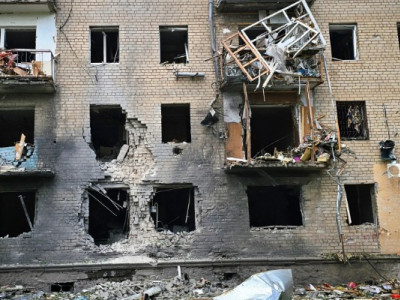
Popov points to a mixed track record on partial truces, noting Trump claimed just the week before that the two sides had agreed to stop striking each other’s energy facilities, only for strikes to resume shortly after — with Ukraine hitting two Russian refineries the night before the New York meeting and Russia striking a southern oil and gas facility that officials say is unrecoverable, followed by a September 24 Russian missile strike on Kyiv that killed two people and damaged a maternity hospital. He argues an agreement lacking monitoring, attribution, and clearly defined consequences for violations would be extremely fragile, since each side would likely accuse the other of breaching it almost immediately.
The expert argues sequencing, more than the wording of individual commitments, is the real crux of the negotiation. He lays out Kyiv’s preferred order: first, a verified partial truce with monitoring and pre-agreed consequences for violations, since it’s more achievable than a full settlement and could reduce civilian harm through winter. Next would come security guarantees — Popov notes Zelenskyy has said the bilateral document with Washington is complete and awaiting a signing date, followed by ratification. Sanctions decisions would follow, tied to observable Russian conduct rather than mere participation in talks, with military disengagement and territorial questions coming last, only once guarantees are legally and politically locked in.
Popov argues Kyiv sees the greatest risk in reversing this order, since territory remains the issue where positions are furthest apart — Russia controls about a fifth of Ukraine, Putin’s demands haven’t meaningfully shifted, and he continues rejecting a leaders’ meeting on terms acceptable to Kyiv while questioning Zelenskyy’s legitimacy. He contends that opening the territorial question before guarantees are signed would leave Kyiv weighing permanent concessions against commitments that might not yet be enforceable. He adds that granting sanctions relief before verified military steps could also erode Western leverage before any real change in Russian conduct is evident, citing former American ambassadors who’ve warned against mistaking movement for progress, since new rhetoric from Moscow isn’t necessarily a new position.
The expert notes Ukraine’s own negotiating agenda reflects this logic: prisoner exchanges and energy and grain issues placed high on the list, the UAE, Switzerland, and Turkey named as possible venues for a trilateral meeting, and insistence that Europe participate in future formats given that any settlement would directly affect the continent’s security architecture. He notes Zelenskyy has also said he expects the war to continue through winter — a statement Popov frames as reflecting planning assumptions rather than necessarily predicting diplomatic failure.
Popov concludes that the test for every proposal emerging from Washington this autumn is straightforward: what does Russia do first, who verifies it, and what measures automatically kick in if the agreement is violated. He argues a process that answers these questions in the right order could lay the groundwork for a durable settlement, while one that gets the order wrong risks producing merely a pause that leaves the underlying conflict unresolved — a pause without credible guarantees that could simply give both sides time to prepare for the war’s next phase.
Read the FULL article on The Gaze: Ceasefire First, Territory Last: The Sequence That Could Shape Peace in Ukraine
Read also: This Is Putins’s Regime Final Phase! Ukraine Burned Refinery on Election Day, — Interview with Jonathan Fink
- Last
-
-
- October, 24
-
-
-
-
-
-
-
-
-
-
-
-
-
-
-
-
-
News by day
25 of October 2026