Russian “Dawn” Must Become “Sunset”: Interview with Head of Ukraine’s Military Intelligence Oleh Ivashchenko

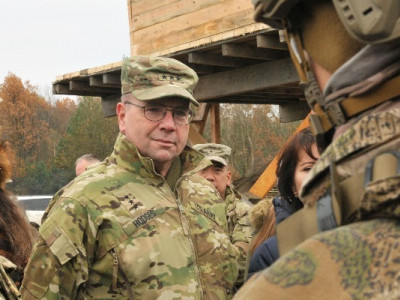
Since the beginning of the year, the Main Intelligence Directorate of Ukraine’s Ministry of Defense (HUR MOU) has been headed by Oleh Ivashchenko. He is a career military intelligence officer who has traveled a long path in the intelligence service. He served in an elite special operations officer unit, participated in special operations that remain classified to this day. From 2015 he was First Deputy Head of HUR, and in March 2023 he headed the Service of Foreign Intelligence of Ukraine.
In an interview with Ukrinform, the head of military intelligence spoke about prospects for how the situation on the battlefield will develop, mobilization in Russia, the state of its economy, and gave a forecast regarding the expansion of Russian aggression against NATO countries.
— You’ve known HUR during different periods of its development. After 2014, military intelligence changed significantly, and the full-scale war accelerated these processes even more. What is your main task today: to continue building up capabilities or to convert what was created during the war into a more sustainable system?
— Since 2014, we’ve undergone serious transformation: we’ve built up technical intelligence, expanded our information gathering capabilities — in particular of strategic significance in areas defined by law.
After the start of the full-scale invasion, HUR’s resources and capabilities grew, but so did the tasks. In particular regarding combat units. Recently, we’ve increased the number of personnel directly involved in combat operations by one-third. And these HUR units play an important role in containing the enemy, particularly on the Zaporizhzhia direction.
Over these years we’ve gained enormous institutional experience. And today it’s important not to lose it. For me it’s important that HUR’s development be constant, and that capability doesn’t depend on who created it or who heads the service today. We need to get rid of the practice of personalizing people or entire units. We don’t have “someone’s people” or “Ivashchenko’s people.” That’s some sort of Russian, serf logic. In the Main Intelligence Directorate, people don’t serve a surname. Here they serve the state.
— During a great war, many new capabilities and units were created quickly, for specific tasks. How do you maintain a balance between tactical initiative on the ground and a single unified chain of command?
— Absolutely, I’m “for” freedom of action within the execution of assigned tasks. And war sets new tasks for us every day. Some of them arise at the intersection of different bodies and structures’ functions. So we must clearly define priorities, clarify authorities, understand who is responsible for what. Not create unnecessary layers where they only slow down work.
A strong unit cannot be a separate center of power.
In our work, it’s precisely freedom of action, non-standard approaches, initiative, readiness to take on risk that allow us to get results. But freedom of action doesn’t mean autonomy from the command system. These are different things. In intelligence, there must be a unified command system, clear authorities and responsibility. A strong unit cannot be a separate center of power.
— In recent years, society has gotten used to a public image of military intelligence. You, on the contrary, are almost never present in the media.
For me, non-publicity is a conscious life position in this position.
— Public appearances should be exceptional. Here, for example, we’re meeting on the eve of Ukraine’s Military Intelligence Day so I can answer pressing questions and mark the work of intelligence officers. In my opinion, the publicity of an intelligence chief has never been a measure of an organization’s effectiveness. For me, non-publicity is a conscious life position in this position. However, HUR’s task is and will be informing society about threats, to the extent that the specifics of intelligence work allows. And this information should help people and the state prepare, not create additional fear. I want to emphasize that I mean the readiness of each person in particular and the state as a whole. This is a shared system. Everyone has their own role.
— Where do you draw the line between necessary secrecy, accountability, and communication with society?
— Publicity and accountability are different things. Intelligence cannot be public in its actions, but it must be accountable to the state and society in forms defined by law. There are legally defined mechanisms for parliamentary, financial, legal oversight. They should work.
We must communicate better among ourselves where our tasks overlap.
I believe that democratic civilian oversight strengthens intelligence and demands that the organization be better.
Similarly, we must constantly improve interaction within the security and defense sector. This doesn’t mean one intelligence service should know another’s operational plans. But interaction principles, boundaries of authority, approaches to solving problems should be clear. We must communicate better among ourselves where our tasks overlap. This is also part of a professional system.
— Before returning to HUR, you headed the Service of Foreign Intelligence. This intelligence body preaches absolute silence. Almost no one can hear in public about the effectiveness of FISU’s (Foreign Intelligence Service of Ukraine) operations.
— And that’s also good and important, because all the work of foreign intelligence concerns activities in the non-military sphere. This is economics, politics. The philosophy of FISU, as a secret instrument, is clearly laid out in the Vision of this intelligence body. I can also say that FISU has developed some of the best capabilities for assessing Russia’s economic potential. The service’s significant achievements in this sphere are confirmed by assessments from our foreign partners. Good interaction has been established between HUR and FISU, we work in coordination and are aimed at a common result.
— Today is the war increasingly moving from the front to the rear — both Russian and Ukrainian? How does this change the very nature of the war?
We are currently capable of striking at a depth of over 2,000 kilometers.
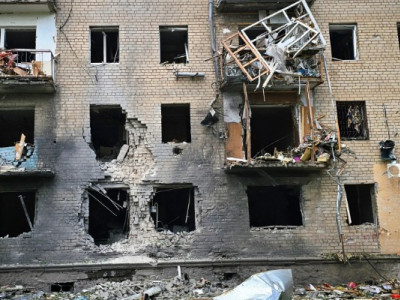
— Wars are waged by states. Wars are waged not only by armies — they’re waged by the entire Ukrainian people for their independence, sovereignty, and future. The front line, of course, remains defining. But a modern war doesn’t end twenty or a hundred kilometers from it. We’re now already sufficiently powerfully destroying and reducing the military-economic potential of the Russian Federation. We’re capable of striking at a depth of over 2,000 kilometers.
— How critical are our strikes for Russia?
Our strikes affect the growth of Russia’s budget deficit, which today stands at 82 billion dollars.
— Critical. Today — very critical.
If after a strike the enemy is forced to stop production, restore the object, change logistics, redeploy air defense means, spend additional resources — this already affects their ability to wage war. Our strikes affect the growth of Russia’s federal budget deficit, which today stands at 82 billion dollars.
We work on energy infrastructure that supplies Russian troops with fuel, on logistics centers, on objects that work for Russia’s military-industrial complex.
Russia is losing the sense that its rear is practically unreachable.
Strikes and the situation in the Black Sea are already creating additional problems for Russia with export logistics, in particular grain. Now they need to export approximately 40 million tons of this year’s grain harvest. Via the Black Sea. For this they need approximately 30 vessels daily. There are essentially no alternative routes. There are more expensive options — transporting by rail to Baltic ports or by truck. But that’s not a way out of the situation.
The task is to reduce the enemy’s ability to produce weapons, supply its troops, and continue this war.
If we speak in figures, Russia produces approximately 130 million tons of grain. About 80 million goes to domestic needs, the rest goes to the external market. And this is now being blocked. This is also a resource of the state that it uses to sustain its economy and continue the war.
And we see the results of this work. We see this effect in Black Sea logistics and Russia’s export capabilities. Russia is losing the sense that its rear is practically unreachable.
The main problems of Russia’s economy are shortage of labor resources, growing federal budget deficit, and deteriorating banking system situation.
But I want to emphasize once more: the task isn’t to show how far we can fly. The task is to reduce the enemy’s ability to produce weapons, supply its troops, and continue this war.
So various tools work here. Our strikes, sanctions pressure, work with partners regarding components, technologies, and equipment that Russia continues to receive circumventing sanctions.
— How does intelligence assess Russia’s ability to continue this war, what are its main problems?
— Russia today is significantly weaker economically than it was at the beginning of the full-scale war. The main problems of Russia’s economy are shortage of labor resources, growing federal budget deficit, and deteriorating banking system situation.
We don’t exclude that Russia will have resources to wage war against Ukraine through 2027 and 2028.
However, it still has sufficient resources to wage war against Ukraine. We don’t exclude that this resource will suffice through 2027 and 2028. For Russia not to have these resources, there must be joint work with partners. Sanctions must actually work. We understand which countries electronic component bases, machines, special chemicals are coming to the Russian Federation from. Many “shell companies” are appearing that bring into Russia what then works for its war machine against us.
— What’s happening with Russian public sentiment?
In Russia already over 60% of people are against the war… Russia’
- Last
- October, 24
-
-
-
-
-
-
-
-
-
-
-
-
-
-
-
-
-
-
-
News by day
25 of October 2026