What Are High-Risk Activities In Ukraine And How Are They Covered By War Risk Insurance

Not each everyday activity is safe enough now in Ukraine. Learn what activities have turned to high risk ones and how they are covered by war risk insurance.
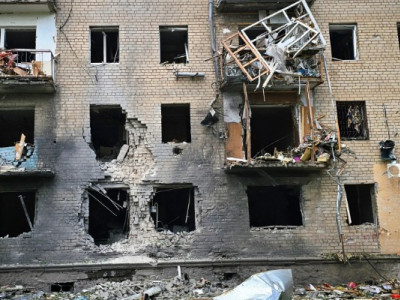
Ordinary daily activity in Ukraine has now turned into a high-risk one with risks that would be unthinkable anywhere else. Discover what counts as a high-risk activity in Ukrainian cities, how war risk insurance covers it, and what actions will automatically get a claim declined.
Before you head to Ukraine you need to get this difference: high risk in Ukraine rarely looks like an extreme activity. It is not nearing or visiting the areas of active war actions. It looks like commuting to work, waiting for a bus, or standing in line outside a pharmacy. Everyday exposure coverage under a war risk policy exists precisely because the routines that make up an ordinary day carry a different risk profile in a country under martial law than the same routines would carry anywhere else. None of the situations below involve reckless behavior. All of them involve the basic mechanics of getting through a day in a Ukrainian city, and each one interacts differently with what a war risk insurance policy actually pays for.
To feel safe in Ukraine, you need to know what risks are implied by each everyday activity, how this activity is covered and what actions can lead to a war risk insurance claim denial.
Read also: Why You Need War Risk Insurance Even for Short-Terms Visits to Ukraine
Urban risk in this context has nothing to do with crime rates or traffic accidents, the categories most travel guides warn about. It refers to the elevated chance that an ordinary daily activity places a person near infrastructure, transit points, or public gatherings that have historically drawn missile and drone attacks. A commute, a queue, or an evening walk does not become dangerous because of anything the traveler does differently. It becomes higher risk because of where and when it happens, which is exactly the gap war risk insurance is built to cover, since standard travel insurance was never designed with this category of exposure in mind.
Getting from one part of a city to another during an active alert is one of the most common everyday situations that raises exposure. Metro stations, tram stops, and bus routes concentrate people in predictable locations at predictable times, and public transport infrastructure has repeatedly been affected during periods of intense missile and drone activity across Ukrainian cities.
Don't want to miss important updates and useful articles? Subscribe to our weekly newsletter!
This is a routine activity, not a risky choice, and war risk insurance treats it accordingly. An injury sustained while commuting during shelling, a drone strike, or a missile impact falls within the standard scope of coverage for passive war risk, provided the location itself sits within insured territory. The policy does not ask whether the traveler could have stayed home. It asks whether the injury resulted from the type of incident the policy covers.
Railway stations and bus terminals see some of the heaviest daily foot traffic in any Ukrainian city, and transport hubs have been a recurring target throughout the conflict due to their role in logistics and civilian movement. Waiting for a connecting train, meeting someone at a terminal, or simply passing through on the way to another city places a traveler in a location with a measurably different risk profile than a quiet residential street.
War risk insurance coverage applies here in the same way it applies to any other insured location. A journalist connecting between cities, a volunteer coordinating a supply drop-off, or a tourist catching an intercity train all carry the same coverage for injury connected to shelling, drone debris, or missile impact while at or near the station, as long as the specific location is not inside an excluded territory.
Open-air markets, public squares, and organized events draw large numbers of people into concentrated outdoor spaces, and concentrated crowds in open spaces carry a different exposure profile than the same number of people spread across a neighborhood. This is not a reason to avoid public life in Ukraine, since millions of residents attend markets and public gatherings daily, but it is a reason to understand how coverage applies.
A war risk policy responds to an injury sustained at a public gathering the same way it responds to one sustained anywhere else within insured territory, based on the cause of the injury rather than the setting. Attending a market or a public event is an ordinary civilian activity, not grounds for a claim to be questioned, and the policy does not treat crowd size or event type as a factor in determining coverage.
Read also: When to Contact War Risk Insurance Assistance During Air Raid Alerts
Substations, power facilities, and other critical infrastructure sit inside ordinary residential areas across Ukrainian cities, often without a resident or short-term visitor being fully aware of the proximity. These sites have drawn sustained attacks throughout the war, particularly during periods targeting the power grid, which means a nearby apartment or short-term rental carries elevated exposure that has nothing to do with the accommodation itself and everything to do with what sits down the street.
This connects to the broader pattern already established for accommodation choice: proximity to infrastructure is a location factor, not a policy factor. A claim connected to an incident near an energy facility is evaluated the same way as a claim from any other insured location, based on the cause of the injury rather than what happens to be nearby.
Yes, no matter how strange this seems, but standing in an outdoor queue also carries a igh-risk activity tag. Lines outside pharmacies, ATMs, humanitarian aid distribution points, and shops are a routine part of daily life in many Ukrainian cities, and a queue by its nature holds a group of people in one fixed outdoor location for an extended period. This is one of the more overlooked everyday exposure scenarios, since standing in line does not feel like an activity carrying any particular risk, yet it shares the same locational vulnerability as any other outdoor gathering.
Coverage for an injury sustained while queuing follows the same standard as every other scenario on this list. The policy does not treat time spent waiting outdoors as a special category, and an injury connected to shelling or drone activity while in a queue is assessed on the same basis as an injury sustained while walking down the same street.
Buy war risk insurance before your trip so that ordinary daily situations like commuting, queuing, or passing through a transport hub are already covered from the moment you arrive.
Power outages change the physical environment of a city after dark, removing streetlights, traffic signals, and the general visibility that makes navigating a sidewalk or crossing a street straightforward. Being outdoors during a blackout is not an extreme activity, but it does raise the everyday risk of falling, tripping, or being caught outside during an alert with reduced ability to see shelter signage or navigate quickly.
War risk insurance covers the war-related causes of injury regardless of lighting conditions, and a genuine war-related incident during a blackout is treated the same as one occurring in daylight. Injuries from a fall or an accident unrelated to shelling, drone activity, or missile impact fall under general medical coverage rather than the war risk component specifically, which is a useful distinction to understand before an evening walk during an outage.
Coverage for ordinary daily exposure does not mean every injury automatically qualifies for a payout. War risk policies carry specific, well-defined exclusions that apply regardless of how sympathetic the circumstances appear, and understanding them matters as much as understanding what is covered.
Travel to an area formally designated as a war zone or a zone of direct combat operations falls outside the policy entirely, along with movement off a marked route into mountains, forests, coastal areas, or other remote terrain, especially where local authorities have issued a movement restriction for that territory. Any involvement in hostilities or military activity, whether formally declared or not, removes coverage for the resulting incident, and this applies broadly to combat participation rather than being limited to formal enlistment. Intoxication from alcohol, narcotics, or medication not prescribed by a doctor voids coverage for an incident connected to that state, and self-harm or attempted suicide falls outside the policy except in cases where the insured person was coerced into that state by the unlawful actions of a third party.
A claim connected to an unlawful act committed by the insured person, where that act has a direct causal link to the incident, is also excluded, as is any injury resulting from exposure to unjustified risk or deliberate danger-seeking behavior that goes beyond the ordinary conduct of daily life. Exposure to ionizing radiation or the use of nuclear, chemical, or biological weapons sits outside standard coverage as a separate category. Finally, failing to follow a treating doctor's instructions in a way that worsens a covered injury can reduce or eliminate the payout connected to that specific complication, even when the original incident was fully covered.
None of these exclusions apply to the everyday activities described above. Commuting, queuing, attending a public event, or living near infrastructure are ordinary civilian conduct, not grounds for exclusion, and the distinction between ordinary exposure and excluded conduct comes down to whether the insured person deliberately entered a restricted or combat zone rather than simply going about daily life in a covered city.
Get war risk insurance built around real urban expo
- Last
- August, 17
-
-
-
-
-
-
-
-
-
-
-
-
-
-
-
-
-
-
-
News by day
18 of August 2026