Will Péter Magyar be another Orbán? Interpreting Hungary's new stance on Ukraine

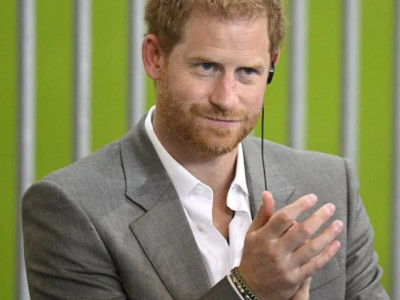
Relations between Ukraine and Hungary are awaiting a reset, which is expected to take place following a meeting between the two countries’ leaders. Hungary’s incoming prime minister, Péter Magyar, has stated this, and it fully aligns with Kyiv’s position.
But Magyar has made other statements that have alarmed many people, raising questions about whether there really are grounds for such optimism.
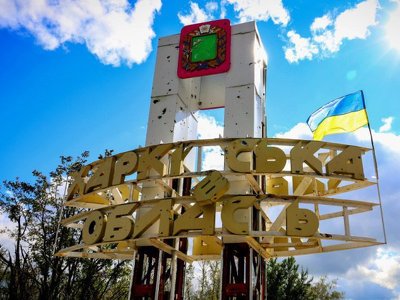
The new Hungarian leader has also made a number of critical remarks about Ukraine’s policy regarding the Hungarian minority in Zakarpattia (Transcarpathia). Moreover, in a breach of diplomatic protocol, he has "initiated" a meeting with Ukrainian President Volodymyr Zelenskyy in Berehove, leading some to speculate whether this could imply that he considers the city to be Hungarian territory.
Following these statements, many in Ukraine began to wonder: are we dealing with a new Viktor Orbán in Budapest, albeit one in a more democratic guise?
Will we face a new ultimatum that could block our progress to EU membership?
And should Ukraine make concessions accordingly?
European Pravda has reconstructed the sequence of events that took place before and after this much-talked-about statement, and we can say with confidence:
there is no cause for alarm.
Despite Magyar’s aggressive rhetoric, this particular statement of his is positive for Ukraine. However, as is often the case in Hungarian politics, a lot was being said "between the lines".
The fact that Magyar made this statement after meeting the mayor of Berehove is an extremely good sign. Magyar’s list of demands gives further reason for optimism. The expectations of Ukraine on the list do not pose any real problems, and the most problematic part of Viktor Orbán's demands has been removed.
Ukraine has a proposal for Budapest that primarily benefits the Hungarian community in Zakarpattia. The community itself has also let Magyar know that it is finally time to reconcile with Ukraine. Ultimately, the new Hungarian leader will have to take Brussels' position into account. So the statements about resetting the relationship have solid grounds.
In this article, we explain what’s currently happening in Hungarian politics regarding Ukraine and how to act in order not to miss this opportunity.
Péter Magyar’s statement came out on Tuesday evening. The new Hungarian leader published his first extensive post on Ukraine after meeting with the mayor of Berehove, Zoltán Babják, who travelled to Budapest specifically for the meeting.
There are positive elements for Kyiv here, as well as some negative ones which have caused confusion or even outrage among many people in Ukraine. Let’s focus on those first.
First of all, many were surprised by the wording, in that Magyar himself appeared to be inviting Volodymyr Zelenskyy to a meeting. "I am initiating a meeting with President Volodymyr Zelenskyy in early June, symbolically in Berehove, a Hungarian-majority town," he wrote.
This is clearly not how meetings between state leaders are supposed to be arranged, as even European Pravda's Hungarian sources acknowledge. In personal relationships, especially between friends, there is no issue with "inviting oneself over", but in relations between countries, the invitation should come from the host country.
So why did Magyar post this statement?
The explanation is obvious to anyone who follows the Hungarian leader's media activity. This may sound unusual to Ukrainians, but it’s true: Magyar still writes his own posts and comments, and at times his improvisations drive his international and media teams up the wall.
More importantly, there are no grounds whatsoever to claim that Hungary's new leader is questioning Ukraine's sovereignty over Berehove or anything like that.
Magyar avoided using the word "invite" (since he can only invite someone to Hungary, not to Ukraine). And in the final sentence of his post – probably not everyone read that far – he makes it clear that he is waiting for an invitation from the Ukrainian authorities: "I hope to soon be able to accept his [the mayor’s] kind invitation to Berehove. I am ready."
Overall, the tone of Magyar’s post is rather positive.
The main message is: the Ukrainian-Hungarian conflict of the Orbán era must end.
"It is in the interest of Hungarians living in Transcarpathia to place Hungarian-Ukrainian relations on new foundations," he says, adding that this was the outcome of his conversation with Zoltán Babják.
"The aim of the meeting [with the mayor of Berehove] is to improve the situation of Hungarians in Transcarpathia and to support their ability to remain in their homeland." According to Magyar, if Ukraine resolves the issues that Hungarians face, then "we can certainly open a new chapter in Ukrainian-Hungarian bilateral relations".
Now it’s time to move on to the "price to pay" – what exactly Magyar expects the Ukrainian authorities to do.
"The concessions announced by the Ukrainian government in 2025 in the field of education are a step in the right direction, but they are not sufficient." Magyar’s wording here came as a surprise to many (did the government really announce something specifically for 2025?).
Magyar also provided specific details in his post – a list of the problems that supposedly need to be addressed. But this list is even more puzzling.
Neither the author of this article nor European Pravda's sources have been able to determine its origin. One of the most interesting (and possibly realistic) explanations that’s been suggested is that the list may have been generated by AI in response to a prompt such as "Please list the language-related problems experienced by Hungarians in Zakarpattia". This could explain the inaccuracies in it (which might just be AI hallucinations).
"Higher education in Ukraine remains monolingual," Magyar claims in the first point on the list of issues he wants resolved.
But this is simply not true. There is a fully Hungarian-language institution in Berehove – Ferenc Rákóczi II Transcarpathian Hungarian College of Higher Education – and in Uzhhorod, there is a Hungarian institute within the state-run national university where instruction in Hungarian is available.
"Final examinations [when leaving school] are conducted in Ukrainian," the second point on Magyar’s list says – and again, this is not true. Hungarian children in Zakarpattia can take the National Multi-Subject Test (NMT) in Hungarian if they wish. It is true that the issue of the old external independent assessment (ZNO, for admission to universities in Ukraine) remains unresolved (although it is not being conducted under martial law anyway), but according to European Pravda sources, this is not a red line for the Ukrainian government.
This is only a partial list of the inaccurate claims in the post.
Even more importantly, all the points where Magyar was referring to actual demands of the Hungarian minority in Zakarpattia are ones that Ukraine is willing to address. European Pravda has reported several times that the government even has a package of proposals ready. Some of these ideas were approved at a working level between Kyiv and Budapest back in 2024, but Viktor Orbán set a political goal of blocking Ukraine’s path to EU membership, and last year all discussions were halted.
Now these ideas may get a new lease of life. They include clearer regulations for schools with Hungarian-language classes, as well as formalised rights for Hungarians in Ukraine to address local authorities in their native language in areas where there are Hungarian communities, and more. These are precisely the points that Magyar listed.
Even more important, however, is what Hungary’s new leader did not mention.
Back in January 2024, Hungary’s then foreign minister Péter Szijjártó (who is now known to have followed instructions from his Russian counterpart Sergei Lavrov) handed Ukraine a list of 11 demands.
Some of them can realistically be resolved and would benefit Ukrainian citizens of Hungarian origin.
But other points were totally unacceptable from the outset. They had nothing to do with language or education rights, and it’s widely believed they were included simply to provoke a refusal from Ukraine and shift the blame onto Kyiv.
For example, Orbán’s government demanded that Ukraine change its electoral system and guarantee representation for Hungarians in parliament. This would require amendments to the Constitution and a nationwide referendum – effectively impossible even after the war is over.
Magyar did not even allude to these absurd political demands, which is another indication that he is inclined towards a constructive approach. And there are further, more tangible signs of this as well.
We’ve mentioned how significant it is that the mayor of Berehove, Zoltán Babják, was the one who travelled to Budapest to meet Péter Magyar.
Babják is considered one of the most pragmatic leaders of the Hungarian community in Ukraine – and there are good reasons for that.
In 2023, when Viktor Orbán was blocking the political decision to open EU accession negotiations with Ukraine, it was Babják who wrote an open letter to him, explaining that this decision was important for the Hungarian community. Orbán initially refused to consider Babják’s request, but eventually he was forced to "step out for coffee" during the EU summit, allowing the decision on opening the negotiations to go through.
Babják has also visited the front line and is said to be the only Hungarian community leader who has been to positions near the line of contact.
Incidentally, the way Magyar phrased his post led many to believe that Babják had personally conveyed the list of problems faced by Hungarians. But this seems unlikely: the head of Berehove's community could hardly be unaware of the existence of a Hungarian-language college in his own city.
This issue is not just about personalities.
For Péter Magyar, caring about Hungarians abroad is not political opportunism, but part of his convictions and
- Last
-
-
-
-
-
-
- April, 30
-
- April, 05
-
-
- March, 20
-
- March, 10
-
-
-
- March, 09
-
-
-
-
-
-
News by day
4 of May 2026