How EU can break the deadlock on Ukraine's swift membership

Russia’s war against Ukraine has fundamentally reshaped Europe’s geopolitical architecture and this demands a radical rethinking of the European Union’s enlargement methodology.
Amid ongoing discussions about a negotiated settlement, the EU faces a dual challenge: to act as a reliable guarantor of Ukraine’s security while preserving its own institutional integrity.
Much of the negative sentiment among member states towards accelerating Ukraine’s accession stems from a misunderstanding of the key parameters of a new, ambitious idea.
Recent proposals regarding Ukraine have often been mistakenly perceived within the EU as a "shortcut".
The New Europe Center proposes a clearer model - Membership by Design.
Read more about it in the article by Leo Litra of the New Europe Center: A new format for accession: how to avoid pitfalls and ensure Ukraine’s EU membership.
In seeking to end Russia’s war, the West is developing a framework for a future settlement, with Ukraine’s accession to the European Union seen as a central stabilising element.
Strategic consultations suggest that EU member state capitals will find it difficult to reject a peace plan in which EU membership serves as the key stabilising factor.
However, to succeed, any "creative format" must be convincing.
It cannot be a "free ride" – membership without conditions. Rather, it should be a mechanism in which political membership status is granted to secure peace, while the functional attributes of membership are earned through demanding and consistent reforms.
The EU’s own inability to reform effectively blocks a merit-based approach; in this sense, the problem lies within the EU itself, not the candidate countries.
To resolve these contradictions, the New Europe Center proposes the Membership by Design model.
Ukraine would formally sign and ratify an accession treaty, sending an irreversible political signal necessary for a peace agreement.
However, this arrangement would not grant voting rights until fundamental criteria are met. Voting rights would be introduced gradually, depending on progress in key reforms, specifically within the Fundamentals cluster, which includes rule of law and justice. This approach reduces the risk of institutional instability.
Immediate benefits would instead include access to the Single Market and security integration, while full access to budget transfers (such as the Common Agricultural Policy, CAP) would be phased in gradually to protect the EU budget.
What should the EU change first?
First, abandon terms like "reversible accession", "phased accession" or "fast-track accession", which imply either procedural shortcuts or endless waiting rooms.
Instead, adopt the term Membership by Design, emphasising that the political framework is established immediately, while its substance strictly depends on fulfillling the Fundamentals.
Second, clearly communicate that although the political accession process is accelerated, judicial and anti-corruption reforms (within the Fundamentals cluster) remain key conditions for obtaining voting rights and funding under this model.
Third, shift discussions away from media leaks into confidential, well-considered formats to avoid negative reactions from member states to perceived "shortcuts".
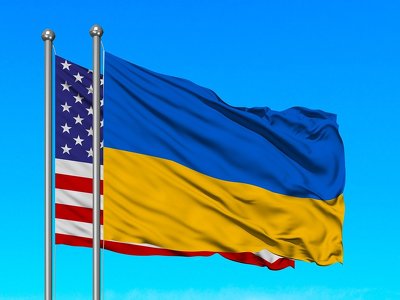
The next step is to leverage the United States factor, actively involve Washington in supporting this model and use its influence to unblock Hungary’s veto and the "silent bloc of the reluctant".
Finally, restore the link between reforms and rewards.
- Last
- February, 05
-
-
-
-
- April, 28
-
-
-
-
-
-
- April, 27
-
-
-
-
-
-
-
-
-
News by day
25 of March 2026