A school revolution: how systemic problems in education have led to mass protests in France

On Saturday 10 October, Gabriel Attal, a former education and prime minister, as well as a potential presidential candidate, unveiled what he called a "pact for youth".
The programme was presented as a response to the anger spreading through France’s upper-secondary schools. By the weekend, France’s lycée protests had acquired a new political life. The students are planning another national day of action on Tuesday.
On Friday, 141 lycées were closed, a sharp fall from the first days of the protests. But the fact that the protests have become less widespread does not mean that the political problem has gone away.
France has spent years accumulating the conditions for this outburst.
It has neglected the ordinary machinery of public education, allowed regional inequalities to harden, and then responded to a student movement as if the principal issue were public order.
The result is a crisis that cannot be reduced either to youthful disorder or to police repression. Both are present. Neither explains the whole story.
The movement began around 21 September in schools in the Créteil education district, which includes much of France’s poorer eastern suburbs. The first complaints were about the daily experience of attending a school that often seemed unable to provide the basics.
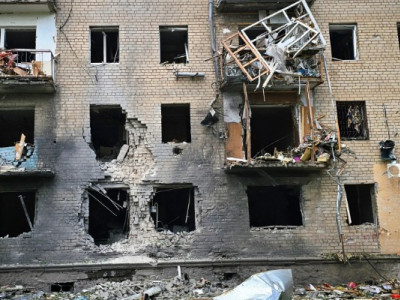
A student in Aubervilliers had no French teacher while preparing for an important examination. In Sevran, pupils showed photographs of damaged chairs, holes in ceilings, mould, leaking roofs and broken toilets.
Some classrooms were difficult to heat in winter and difficult to cool in summer. Timetables stretched from early morning into the evening, with long gaps that left pupils stranded in school buildings without adequate supervision or food.
France’s public secondary schools have fewer teachers than they did in 2008, despite having roughly 250,000 more pupils. More than 70 per cent of classes in public general and technical schools have more than 30 pupils, while one in five has more than 35. Long absences without replacement have increased sharply, particularly in the Créteil and Versailles regions.
Buildings tell the same story. The average French lycée is more than six decades old. Vocational schools are older still. Only a small proportion of secondary-school buildings were built or substantially renovated in the past academic year.
The problems are not evenly distributed. In Seine-Saint-Denis, where the movement first took hold, the poverty rate is close to 30 per cent, almost twice the national metropolitan average.
France’s republican school system promises that a child’s future should not be determined by family wealth, religion or geography.
Yet pupils in the poorest areas are often asked to accept the largest classes, the oldest buildings and the most unstable supply of teachers.
The students understand the contradiction. They are not necessarily demanding a new ideology, but that the Republic honour its existing one.
The protests have also produced real violence, and some schools have been damaged or ransacked. Teachers and headteachers have been threatened or injured. Incidents have been reported in Bayonne, Toulouse, Saint-Chamond, Poitiers and Saint-Étienne. In one case, a fire spread to a teacher’s car. In another, a school cafeteria was damaged.
The Education Ministry has estimated the cost of repairs at about €30 million and warned that thousands of pupils could lose teaching time.
The state’s authority cannot survive if school staff are attacked and schools become targets.
Nor is the idea that French schools are becoming unsafe entirely invented. Official surveys show substantial levels of intimidation, defiance and verbal abuse.
Many teachers report that pupils challenge their authority or mock their work. A smaller but serious minority report threats, harassment or physical assault. At the same time, the latest official data does not support the claim that French schools are simply descending into generalised violence. Most staff say they feel respected by pupils and safe inside their schools. The number of recorded serious incidents per 1,000 pupils fell slightly in the latest year.
The memory of Samuel Paty hangs over this debate. Paty was murdered in 2020 after being targeted by an Islamist extremist for showing caricatures of the Prophet Muhammad during a lesson on freedom of expression.
Dominique Bernard, another teacher, was murdered in 2023 by a former pupil in a terrorist attack. France’s schools have since become the place where arguments about secularism, religion, free speech and state authority collide with particular force.
The figures recorded during the first national commemoration of Paty showed the scale of the challenge. Hundreds of pupils were reported for provocations, refusal to participate, threats or expressions of support for terrorism. That episode should not be used to label the current movement as Islamist, most of the present protests concern staffing, buildings, timetables and inequality.
But the Paty legacy does expose a larger question: how can teachers exercise authority in an open society when the state has not reliably protected them?
The deployment of riot police has opened another dispute over how the state exercises its authority.
Images of tear gas and riot police confronting teenagers have travelled quickly through France and abroad. In Saint-Denis, the mayor, Bally Bagayoko, was filmed facing police lines while trying to shield young people. In Lens, a 15-year-old lost a hand during an incident involving a police grenade. In the Paris region, a police officer has been placed under investigation after a teenager was seriously injured. By 9 October, more than 200 pupils and over 800 police officers or gendarmes had reportedly been injured,
while more than 6,800 people had been placed in police custody, 86 per cent of them minors.
The police have a duty to prevent arson, protect school staff and stop attacks on public buildings.
They also have a duty to use force lawfully and proportionately. Student violence does not excuse unlawful policing. Alleged police misconduct does not erase the violence committed by protesters.
The government has now conceded that the grievances are legitimate. Prime Minister Sébastien Lecornu has promised rapid action on teacher replacement, school buildings, timetables and Parcoursup. The Education Ministry has said it is contacting approximately 3,000 qualified teachers who could be sent to schools facing shortages.
That is a useful emergency measure, but it os not the same as solving the recruitment crisis. The government’s plan may demonstrate political responsiveness while leaving the structural weakness untouched. Ministers have recognised the problem, but recognition is cheaper than delivery.
The same tension is visible in the education budget. The government presents a 2027 allocation of roughly €64 billion, excluding pensions, compared with €48.8 billion in 2017.
Yet wider education spending barely increased in real terms last year. Inflation, salaries, energy costs, demographic change and the maintenance of old buildings consume money before it reaches the classroom.
France can still finance its debt, but the government has far less room to finance new promises.The European Central Bank has not judged that emergency intervention is necessary. But the country is in a politically dangerous financial position.
Public debt reached about 119 per cent of GDP at the end of the second quarter.
The government is working with a deficit of roughly 5.4 per cent of GDP this year, while annual interest costs are projected to rise from about €79 billion to more than €91 billion.
The ten-year borrowing rate has approached 5 per cent, its highest level in decades. Each rise makes the government’s promised concessions harder to fund. It means that markets are becoming less willing to treat French promises as costless.
The government therefore faces a narrow corridor. It must invest more in the services that citizens believe are collapsing while convincing creditors that public spending will eventually be brought under control. It must punish destruction without allowing the police response to define the entire crisis. It must restore authority in schools without turning schools into extensions of the security state.
The government’s online consultation gives pupils a formal channel and produces a more precise map of their concerns. But consultation can become a substitute for decision. Students have already spent years being consulted about problems that remained visible afterwards.
France’s crisis is not simply a crisis of youth. It is a crisis of state capacity.
The young people on the streets are not all representative of the country’s lycéens. The movement is uneven, sometimes confused and occasionally violent.
It has not produced a coherent national programme. But it has revealed a common experience across very different schools: the sense that institutions ask for obedience while failing to provide the conditions in which obedience can appear reasonable.
France’s ability to sustain long-term European security commitments, including support for Ukraine, depends partly on whether it can rebuild domestic authority and fiscal credibility.
Charlotte Guillou-Clerc,
Journalist, France
- Last
News by day
13 of October 2026