Eco-solutions: Frontline Trostianets joins Declaration of Gas-Free Cities

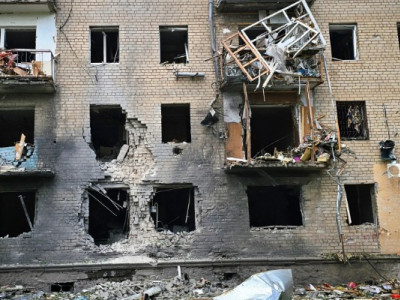
Trostianets, located just 35 kilometers from the Russia border, regularly comes under attack on critical energy infrastructure. In these conditions, dependence on fossil gas creates additional risks for stable heat and energy supplies.
At the same time, postwar recovery requires solutions that combine energy security, economic efficiency, and climate resilience.
That is why, during the Ukraine Recovery Conference in Gdansk, Trostianets Mayor Yurii Bova signed the Declaration of Gas-Free Cities.
The document does not provide for an immediate rejection of gas, but rather for a gradual reduction in its use and a transition to renewable energy sources and modern energy-efficient technologies. For Trostianets, this became a continuation of its course toward green reconstruction after Russian occupation.
Trostianets is already implementing practical solutions that help reduce dependence on fossil gas. Greenpeace implemented its first project in Ukraine, in which heat pumps became the only source of heating and hot water supply for an apartment building. This approach shows how investment in modern technologies can strengthen communities' energy resilience.
During the conference, Yurii Bova also presented new plans for the city's green reconstruction, which require support and partnership.
Together with Chortkiv, Trostianets became one of the first Ukrainian cities to join the network of gas-free cities. These communities have declared their intention to develop energy resilience, introduce modern technologies, and create conditions for a gradual transition to a green future.
Background
Earlier, it was reported that communities in the Sumy and Chernihiv regions would be the first to receive funds for the construction of solar power plants. Thus, the Khmelivska, Synivska, Talalaivska, and Pryluky communities will become the first participants in the "Energy Resilience and Independence of Communities" program, which provides for the construction of their own solar power plants and will supply energy to social institutions in different regions of Ukraine.
Rubryka also visited Chortkiv, a city that has powered most of its critical infrastructure with solar energy, examining how the system works, how much it helps the city save, and whether this experience can be replicated in other communities.
- Last
- July, 20
-
- July, 19
-
-
-
-
-
-
-
-
-
-
-
-
-
-
-
-
-
-
News by day
21 of July 2026