More Women Are Wearing Their Wrinkles With Pride. Their Gray Hair, Not So Much.

I have a friend deeply averse to the notion of anything remotely toxic so much as brushing up against her skin. She wears no makeup, uses no cosmetic products of any kind except moisturizer when needed, and though I’ve never asked her which cleaning products she uses at home, I’m pretty sure she swabs everything down, possibly including her teeth, with baking soda only.
And every six weeks, my friend visits a professional who snaps on a pair of plastic gloves, mixes up a strong chemical concoction personalized especially for her, and spreads it all over her scalp. Because there is one thing that this friend, who refuses to wear even mascara, will never give up: covering her gray.
She is a youthful 70-something, fit, comfortably unadorned. Her hair, when she leaves the colorist, is a nimbus of spun gold, eye-catching, and natural-looking as a baby’s. When gray sneaks into her part, as it does monthly, she’s reminded that without her steady appointments, instead of her golden nimbus, she would be wearing a Brillo cap of dull steel.
I asked her recently, as unpointedly as I could, why she dyes her hair when she’s so meticulous about freeing herself from other perceived toxins? Her response was swift and sure. “Because letting my hair go gray—more than any other indication of aging—would add years to my face,” she said. “I’m not ready for that.”
Even from here I can see hordes of you rising in anger out of your chair, eager to march in defiant support of the gray you grew in and cultivated during the pandemic and now wear as proudly (and elegantly) as a hard-earned academic hood. Congratulations to you! You did the right thing!
“Letting my hair go gray—more than any other indication of aging—would add years to my face. I'm not ready for that.”
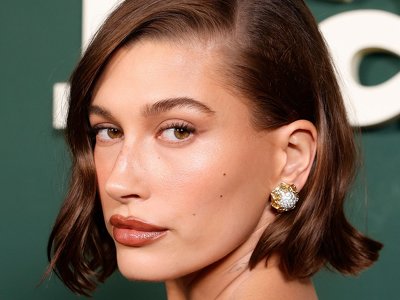
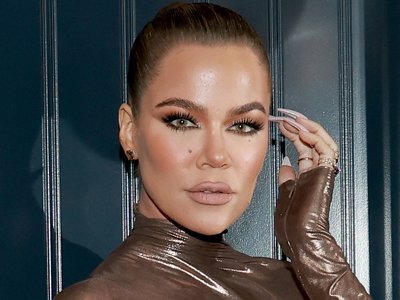
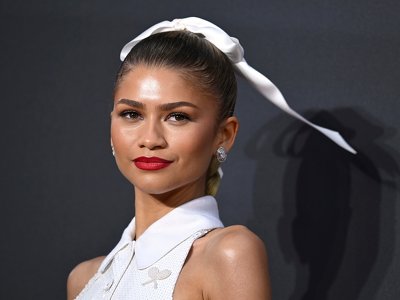
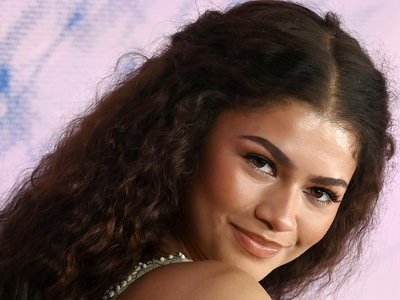
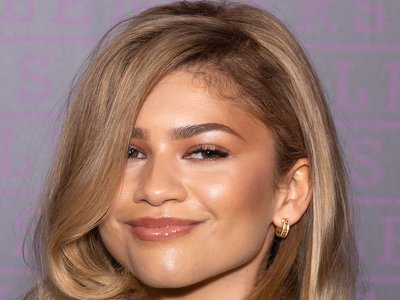
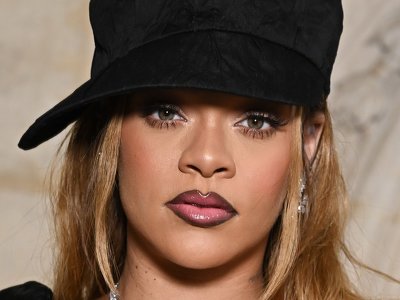
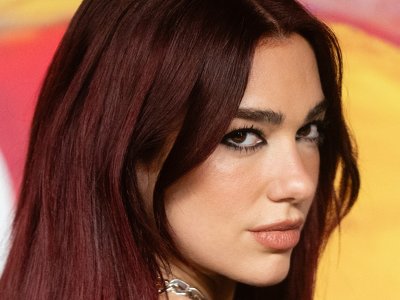
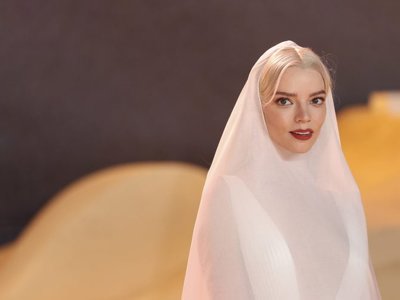
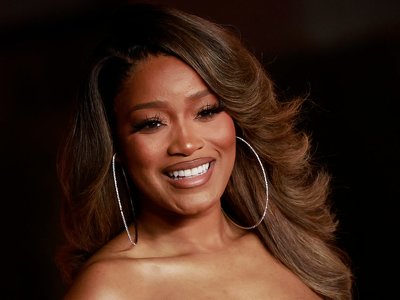
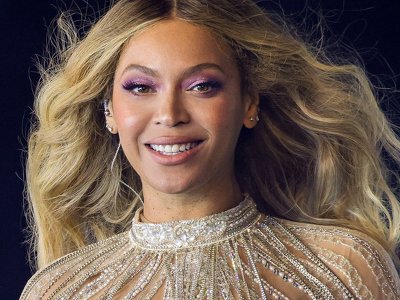
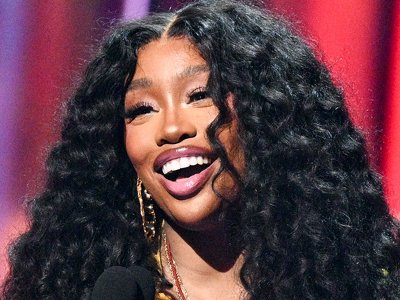
But more than a few of the pandemic's gray-pride cohort have returned to a life of foils, ammonia, and root touchups. And while it's been very refreshing to see a bevy of actresses on recent red carpets who have chosen to eschew most serious aesthetic interventions—have you noticed that almost every one persists in erasing all evidence of the grays on her head? These talented women are allowing their faces to age, more or less, visibly (and naturally) but refuse to forswear their highlights. Only Helen Mirren and Kathy Bates among them have let their silver shine through. So many others—recent Oscar winner Amy Madigan, Jean Smart, Parker Posey, Julia Roberts, Sarah Jessica Parker, Pamela Anderson, Rhea Seehorn, Robin Wright, Keri Russell to name more than a few—obviously have not given up their monthly colorist appointments. (And if we do see an actress over 45 with visible silver, well, it makes headlines.)
If you are one of those evolutionary biology types who believe that long, lush, shiny, pigmented hair is a signal that a person is youthful, healthy, and reproductively robust, it’s obvious why someone who makes her living pretending to be another person might want to keep the door open to the possibility of pretending to be a youthful one.
I recently wrote about feeling hopeful that the age of facial conformity might be losing steam, appreciating the way 60-year-old Jodie Foster and 67-year-old Annette Bening, for example, have steered clear of facial fiddling. But they both remain committed blondes. There’s evidently a limit to how far an actor will go in compromising their ability to portray a more youthful person. And maybe that’s wise.
These talented women are allowing their faces to age, more or less, visibly (and naturally) but refuse to forswear their highlights.
According to an analysis by the Geena Davis Institute (a nonprofit that champions equitable representation in the media) in partnership with Next50 (a nonprofit that supports independence in aging), male characters significantly outnumber females within the 50+ age bracket: 80% in films, 75% in broadcast TV, and 66% in streaming platforms. In other words, if she wants to be able to compete for the maximum number of roles available to her, an actress over 50 might be very cautious about the ways in which she chooses to authentically represent her age.
But what about the rest of us? Studies tell us that hair is among the top three features (along with height and weight) used when describing others, and one of the features most often recalled after a social interaction. And if you think of looking in the mirror as a kind of social interaction (albeit with yourself), it’s not difficult to understand why we might be inclined to try to preserve the hair style, texture, and color that we’ve come to believe leaves us with the most flattering impression. And the one we’ve long identified with.
Studies also tell us that our health is correlated to the quality of our hair. So the condition of it can be a powerful social signal. One of the factors that makes it most attractive, according to one study, is its shine—the way it reflects light. And that can be sorely lacking in hair that’s lost pigment and become coarser with a rougher cuticle.
“There’s a reason why 40, 50, and 60 don’t look the way they used to, and it’s not because of feminism or better living through exercise. It’s because of hair dye.” —Nora Ephron
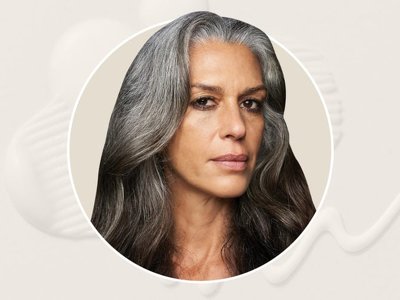
Of course there are many ways gray, white, and silver hair can be very beautiful, well-cut-and-conditioned, alluring as moonshine. Still, a woman who chooses to go gray risks the disapproval and the (inappropriate and unfair) stigmas our culture often showers on people perceived to beold: that we are frail, weak, incompetent, “letting ourselves go,” etc. And studies show that both men and women perceive faces with gray hair as both older and less attractive than the same faces without it. (Hey, don’t throw those tomatoes at me! I’m only reporting.)
As if that’s not enough reason to dye—or for you contrarians, enough reason not to dye—coloring your hair is the easiest way to try to lower the perception of your chronological age a notch or three. As Nora Ephron wrote in her 2006 essay On Maintenance: “There’s a reason why 40, 50, and 60 don’t look the way they used to, and it’s not because of feminism or better living through exercise. It’s because of hair dye.” Not to mention that it’s far less of a strain on your budget than Botox or fillers or a $50,000 facelift.
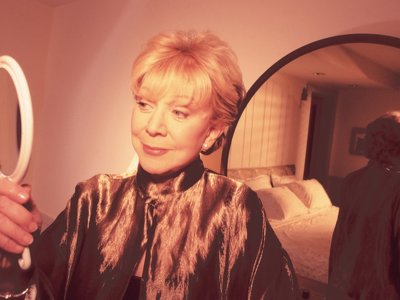
As for 75-year-old me, I’m on the fence about coloring, and my hair shows it. Every four months or so I have a balayage treatment that, by tinting some of the gray with blondish highlights, produces what Victorian poet Gerard Manley Hopkins might call pied beauty, a range of shades making it impossible to say what color my hair actually is. Blonde? White? Filamented with taupe?
My balayage appointments, like late summer lightning, illuminate my late middle-aged, largely unretouched face just enough to make me feel like I’m not yet fully in the autumn of my days. Like my friend, I’m unlikely to forgo the dyeing process, but not just because I think without it my face would look older. At 75, my face already looks older. I continue to see my colorist because I like the way that face is complemented by its varicolored frame, which adds a brightness that pleases me every time I see it.
Read more from Valerie Monroe:
- Last
- April, 28
-
- April, 27
-
- April, 26
-
-
- April, 25
-
- April, 22
-
-
-
-
- April, 16
-
-
-
-
-
- April, 15
-
-
-
- April, 13
-
-
News by day
28 of March 2026