An Insider’s Guide to the Best Beauty Treatments in Seoul

When I arrived in Korea last fall, I had one goal: to rest. By that point, I had been a beauty editor for over a decade, and somewhere in the churn of constant deadlines and unrelenting product launches, I'd lost the plot. It’s not that I fell out of love with beauty—never—I just forgot what it felt like to be in it for myself. I wanted a break, a moment to reset. And as a Korean American who dreamed of living abroad someday, Seoul felt like exactly the right place to land when I needed a reminder of who I was outside of a job title.
What I didn't expect was for beauty to find me anyway—which, in hindsight, was ridiculous given the country is a mecca for it.
In the years I've been visiting, Korea has further cemented its place as the ultimate beauty destination. This comes down to three things: innovation, accessibility, and price. Treatments like skin-tightening Thermage, which can run $3,000 or more in cities like New York and Los Angeles, cost half as much or less here. The market is also hyper-competitive, which means the standard of care is high and there's always something new to try. For the beauty-obsessed, there is simply nowhere better.
The biggest challenge? Knowing which treatments to choose and how to book them. After spending a year entrenched in Seoul’s beauty scene, I've learned a lot—and I want to share it all. Ahead: the most popular procedures that live up to their hype, a few lesser-known options worth adding to your itinerary, and some guidance on booking.
Navigating Seoul's beauty landscape for the first time can feel overwhelming. The clinics are plentiful, the treatments are endless, and though some places offer on-site translators, there are nuances that can be lost in translation. Having spent a year figuring it out myself—and helping visiting friends and family do the same—here's what I'd advise.
Start With Apps
“The three main platforms used in Korea are Gangnam Unni, Yeoshin Ticket, and Babitalk,” says Jeon In, a manager at Baid Clinic in Gangnam. All of them let you browse clinics, compare prices, read reviews, and in the case of Gangnam Unni and Yeoshin Ticket, you can book appointments directly through the app. (Babitalk functions more as a review and consultation forum than a direct booking platform.) “These apps are a nice starting point and give you a sense of what's available at what price. That said, not every clinic is listed on these platforms—some of the best ones aren't—so don't rely on them exclusively.”
Consider a Concierge Service
A good concierge does more than just book appointments for you. They help you manage scheduling around your travel itinerary and navigate language barriers before, during, and after your visits. "Patients coming to Korea often want to combine several services within a limited timeframe," says Donkyo Seo, CEO of HiMedi, a medical concierge service. “A concierge can help determine the appropriate order of treatments, and any pre- and post-care considerations, while ensuring it doesn't interfere with their travel schedules.”
If you're using a concierge for the first time, Seo recommends checking how they vet their partner clinics, which should be listed clearly on their website—ditto for their pricing policies. “You should never feel uncertain about pricing. The prices offered through your concierge should be equal to or better than when you book directly with the clinic,” says Seo. (Jeon adds that if you’re booking directly through a clinic, check that prices for local and international clients remain consistent, too, as this is unfortunately not always the case.)
Lastly, language support should be a given, not an add-on. “For a concierge service, offering language support throughout the entire process—from initial planning to any follow-up care—is a standard requirement,” says Seo.
Know Your Neighborhoods
Myeongdong is your best bet if it's your first time navigating Seoul's clinic scene. It's the most foreigner-friendly area in the city, with English-speaking staff more readily available than other neighborhoods.
Sinsa and Apgujeong are where I'd send anyone looking for more natural results. According to Jeon, “The practitioners here are highly skilled and tend to have a more considered, less aggressive approach.”
Gangnam is where you go if you want access to the latest trends and newest technology; it's the most competitive neighborhood in Seoul, which keeps standards of care high and treatment menus constantly evolving.
Cheongdam is the premium tier with a more private, exclusive atmosphere and a clientele that values discretion. (You may run into a K-Pop idol or actor here.) If budget isn't a concern, this is where to go for the full experience.
What to Do If Something Goes Wrong
Temporary discomfort or minor side effects, including light bruising, swelling, and embossing (small raised bumps that can appear after injections), may occur after some skin treatments. These symptoms usually go away on their own within a few days. “However, if you experience dermatitis, itching, blisters, or irritation that persist beyond this—or if these symptoms are disrupting your daily life, it’s best to visit the clinic immediately for further evaluation,” says Jeon.
For visitors who might not be able to do this, Jeon recommends consulting with the medical staff beforehand (especially if you have sensitive skin or pre-existing skin conditions). This way, you can get prescriptions for ointments, recovery creams, or oral medications in advance, should any post-procedure irritation occur.
The Best Beauty Treatments to Book in Seoul
Skin boosters have been a cornerstone of Korean clinic culture for years, but the category is evolving quickly. These injectable treatments are designed to improve the quality of your skin (not alter the shape or structure of your face). With so many options available, a skin analysis—in which an AI-powered machine photographs your skin under multiple lighting conditions to reveal everything from pore size to hidden UV damage—has become the standard first step at most reputable clinics. This allows your provider to assess your skin thoroughly before recommending the right booster(s) for you.
Skin Botox (스킨보톡스)
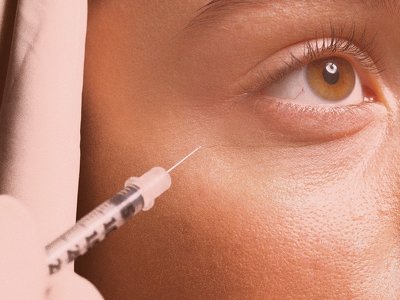
“Skin Botox,” or micro-Botox, involves placing tiny, diluted doses of botulinum toxin just beneath the skin’s surface (whereas traditional Botox is placed in the muscles). These smaller, superficial doses can help minimize the appearance of pores, reduce oiliness, soften fine lines, and create a smoother overall finish without freezing your facial movements.
The results are even better when paired with other boosters. For me, Skin Botox works best with Rejuran or a hyaluronic acid booster like Skinvive; the combination of texture refinement and hydration hits differently than either treatment alone.
The only downside: it hurts. We're talking sharp, rapid-fire jabs across your entire face. I have a high pain tolerance and still teared up through the whole thing. A friend of mine sobbed to the point that I was summoned into her treatment room to hold her hand for the remainder of her appointment. Numbing cream is applied beforehand—and it helps, but only to a degree—so if you’re nervous, I’d ask for extra numbing shots to make the experience more tolerable.
Another note on pricing: Domestic botulinum toxin brands are significantly cheaper than others you might already know, such as Botox, Dysport, or Xeomin. Some of the most commonly used domestic brands in Korea include Meditoxin, Botulax, Hugel, and Nabota (which is FDA-approved for use in the U.S. under the name Jeuveau). Ask your clinic which brands they offer, and don't hesitate to discuss your preferences and budget at the consultation.
What to expect: Appointments typically last between 40 and 60 minutes, depending on how long your numbing cream is left on before the injections. Again, Skin Botox is spicier than other injectable treatments, so it's worth going in prepared. Some redness and swelling at the injection sites are normal and usually clear up within a few hours to a day; bruising may take a few days longer to fade.
Pricing: To give you a ballpark of the vast price difference between domestic and imported brands, the average cost of Medytox's Coretox, one of South Korea's premium products, starts around ₩60,000–200,000 (~$40–$135), whereas Allergan's Botox products range between ₩200,000 and ₩600,000 (~$135–$405). Note: These are estimates at the time of writing and are typical for clinics in Gangnam. Prices can vary by location.
Rejuran Healer
If you’re reading Allure, you’ve probably at least heard of Rejuran—if not by name, then as “the salmon sperm facial.” Let me be clear: This is an oversimplified and, quite frankly, sensationalized description of the treatment that’s not entirely accurate.
Yes, most Rejuran on the market is salmon-derived. And sure, it starts with fluid extracted from salmon milt (which includes sperm and seminal fluid), but the final product that makes it to your face contains no live sperm. Nada. Zilch. “What you get are highly purified DNA fragments (aka polynucleotides or PDRN) that are injected into the skin to promote regeneration, thereby encouraging improved elasticity, firmness, and texture,” explains Jeon.
Results build over multiple sessions, which is why most clinics recommend starting with a series of three treatments, spaced out every three to four weeks. This was one of the main reasons I was hesitant to give Rejuran a try: it’s an investment. That, and the fact that it’s notoriously painful with considerable downtime involved, mainly in the form of embossing that can appear at the injection sites. Unfortunately for my wallet, it was worth the hype. Fortunately for my skin, my face glowed like a supermoon once the bumps went down (about six to seven days post-treatment, in my case).
Now you might be thinking: If I’m only visiting for a few days, is it worth getting Rejuran once? In my experience, yes, but I want to level
- Last
- April, 28
-
- April, 27
-
- April, 26
-
-
- April, 25
-
- April, 22
-
-
-
-
- April, 16
-
-
-
-
-
- April, 15
-
-
-
- April, 13
-
-
News by day
28 of March 2026