Can tourists travel to Ukraine during the war?

Travel to Ukraine is possible with the right preparation. Learn about regional safety, entry rules and war-risk insurance
Ukraine remains open to foreign tourists, but travelling during the war requires conscious preparation, an understanding of safety rules and the right insurance.
First Deputy Head of the State Agency for Tourism Development of Ukraine Taras Lozynskyi notes that tourists often do not travel to Ukraine because they believe insurance companies do not cover them against war risks. In fact, such insurance exists: a tourist can visit Ukraine if they purchase a policy with war-risk coverage and follow safety rules.
This article explains what the security situation looks like in different regions of the country, which rules apply to all travellers, what war-risk insurance is and when it will not work. You will also learn why a standard travel insurance policy is often not suitable for a trip to Ukraine and what to pay attention to before purchasing coverage.
Northern Ukraine — Kyiv, Kyiv, Chernihiv and Sumy oblasts — is an important destination for tourists, as the capital is located here. Kyiv is operating: hotels, restaurants, museums, public transport and rail connections are functioning. At the same time, the city and the region periodically face missile and drone attacks, and air-raid alerts may be announced both during the day and at night.
Chernihiv and Sumy oblasts, due to their border location, carry additional risks, so before travelling there you should carefully check the current situation.
Planning a trip to Ukraine? Purchase a policy with war-risk coverage — standard travel insurance may not protect you from war-related injuries.
Central Ukraine — in particular Vinnytsia, Cherkasy, Kirovohrad and Poltava oblasts — is usually considered a relatively calmer region. There are fewer frontline areas here, but this does not mean complete safety: missile strikes and drone attacks are possible across the country. Cities in central Ukraine are convenient for transit, stops between major destinations and visits to historical locations, but tourists still need access to shelters, a charged phone and insurance with war-risk coverage.
Western Ukraine — Lviv, Ivano-Frankivsk, Ternopil, Khmelnytskyi, Zakarpattia and Chernivtsi — is most often chosen by tourists who want to see cultural heritage sites, mountains and cities with developed tourism infrastructure. The west is located farther from the frontline, so it is usually easier to arrange accommodation, transport and excursions there. However, the region is not completely protected from attacks: air-raid alerts, power outages and the consequences of strikes on infrastructure are possible here as well.
Southern Ukraine — Odesa, Mykolaiv, Kherson oblast and the Azov Sea direction — has significantly different levels of risk. Odesa continues to welcome visitors and retains its tourist atmosphere, but the city regularly comes under attack, and air-raid alerts can last a long time. Mykolaiv and Kherson oblast are located much closer to active hostilities, so for an ordinary tourist these destinations require separate, careful planning; in some areas, travel may be entirely inadvisable.
Eastern Ukraine — Kharkiv, Dnipro, Zaporizhzhia, Donetsk and Luhansk oblasts — is the most difficult region for tourist travel. Kharkiv and Dnipro remain large, functioning cities, but they regularly come under attack, while parts of these regions are located near the contact line or under occupation. Donetsk and Luhansk oblasts are mostly inaccessible for safe tourism, and travel to frontline areas requires not only insurance but also a clear understanding of official restrictions, evacuation rules and logistics.
Read also: Checklist before travelling to Ukraine in 2026: 10 things every foreigner should check
Regardless of where exactly you are travelling, martial law rules apply across Ukraine. The curfew usually lasts from 00:00 to 05:00, although in some regions, especially those closer to the frontline, it may begin earlier. During this time, being outdoors without a legal reason is prohibited, and violations may result in a fine or an identity check.
An air-raid alert is not a recommendation but a signal to act immediately. When you hear a siren or receive an alert, go to a shelter: a metro station, underground crossing, basement, car park or an interior room following the “two walls” rule. Do not stay near windows, on balconies or inside a car. You may leave the shelter only after the official all-clear.
Foreign tourists should download offline maps in advance, save the contact details of their hotel and embassy, and carry a power bank, cash, documents and a copy of their insurance policy. It is also important to follow official alerts, avoid photographing the consequences of strikes, military equipment or air-defence operations, and not share your real-time location.
Do not take risks while travelling around Ukraine. Choose war-risk insurance
with coverage for shrapnel injuries, blast waves, concussions and emergency medical assistance.
War-risk insurance is essentially the same travel medical insurance, but with additional coverage for specific events that are usually excluded from standard policies. Regular insurance may cover illness, food poisoning or an everyday injury, but it often does not apply if the harm to health was caused by hostilities, a missile strike, a drone, a blast wave or a terrorist attack.
Don't want to miss important updates and useful articles? Subscribe to our weekly newsletter!
A policy with war-risk coverage is designed precisely for such situations. It may include emergency medical assistance, hospitalisation, treatment of injuries, medication and compensation for specific injuries if they occurred as a result of passive war risks. This is especially important for tourists: even if a person is not involved in hostilities, they may be injured by shrapnel, a blast wave or the collapse of structures.
The main passive war risks covered by insurance include:
These amounts are indicative and depend on the specific product. The key point is not to rely only on the marketing name of a policy, but to check exactly which injuries and events are included in the coverage.
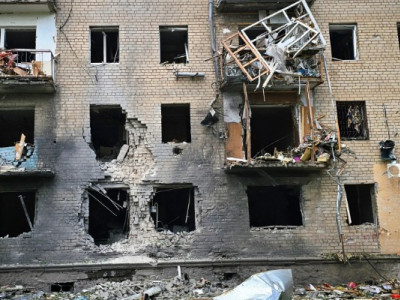
Passive war risks are situations in which a tourist is not involved in hostilities but may be harmed by their consequences. For example, a person may be in a city during a missile attack, near the site where debris falls, in an area of air-defence operations or in a building damaged by a blast wave.
Passive risks include injuries from shrapnel, missile and drone debris, concussions, fractures, wounds, burns, the consequences of structural collapse and other injuries not caused by participation in hostilities. These are the scenarios most relevant to a civilian tourist travelling around Ukraine and following safety rules.
Insurance against passive war risks does not mean that a tourist can deliberately travel to an area of active hostilities or take part in military actions. This coverage applies to a person who is in the country as a civilian and was injured as a result of circumstances related to the war.
Read also: What to see in Kyiv as a tourist: interesting places for your first trip
Even a policy with war-risk coverage has limitations. It may not apply if a tourist deliberately violated the rules, was in a restricted area, ignored the curfew or knowingly travelled to an area of active hostilities. Many insurance products also exclude participation in hostilities, service in armed formations, intentional actions and stays in temporarily occupied territories.
Insurance may not cover situations where a person did not notify the insurance company in time, did not keep medical documents or violated the procedure for filing an insurance claim. Therefore, before travelling, save the insurance company’s hotline number, understand the notification deadlines and know which documents will be required for a payout.
You should also check the territorial validity of the policy. Some contracts do not apply in areas of active hostilities, temporarily occupied territories or settlements where government authorities do not exercise full control. For a tourist, this means one simple rule: before travelling to a particular region, make sure that the policy is valid there.
You can travel to Ukraine during the war, but it must be a conscious and well-prepared trip. A tourist should study the security situation in the region in advance, follow the curfew, respond to air-raid alerts and carry a charged power bank, cash and offline maps. It is equally important to purchase insurance with war-risk coverage, as a standard policy often does not protect against injuries caused by shrapnel, blast waves or other consequences of war.
Ukraine is open to tourists, but safety starts with preparation. Purchase a policy with war-risk coverage before your trip and travel with greater peace of mind.
!start_tag_redirect href='https://visitukraine.today/insurance/war-risks-insurance'!}
{!end_tag_redirect!}
Reminder: if you are planning a trip to frontline cities, learn which policy you need in such regions and what risks it covers
.
Image: Pexels
Want to know more? Read the latest news and useful materials about Ukraine and the world in the News section.
We recommend purchasing it for a safe and comfortable trip to Ukraine:
Visit Ukraine Insurance – insurance covering military risks for entry and travel in Ukraine;
Visit Ukraine Car Insurance – car insurance with extended coverage in Ukraine;
Visit Ukraine Legal Advice – comprehensive legal support on entry to Ukraine;
Visit Ukraine Tickets – tickets to/from Ukraine;
Visit Ukraine Tours – the largest online database of tours to Ukraine for every taste;
Visit Ukraine Hotels – hotels for a comfortable stay in Ukraine;
Visit Ukraine Merch – patriotic clothing and accessories with worldwide delivery.
© 2018-2026, Visit Ukraine. Use, copying or reprinting of materi
- Last
- October, 10
-
-
-
-
-
-
-
-
-
-
-
-
-
-
-
-
- October, 09
-
-
-
News by day
11 of October 2026