Ukrainian-Polish investigation of the Huta Pieniacka massacre site completed in Lviv region

The search operations took place from June 8 to June 18 on the territory of the former settlement, which is now part of the Pidkaminska settlement territorial community in the Zolochiv district of the Lviv region.
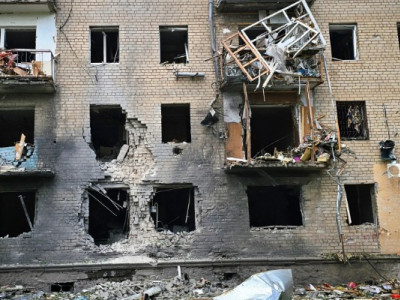
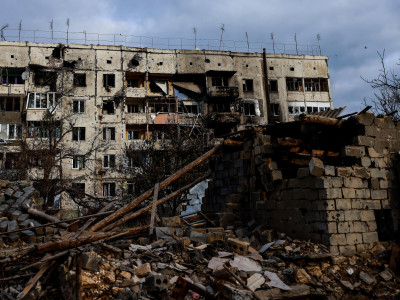
The Polish Institute of National Remembrance noted that the research was challenging because almost nothing remains of the former village's buildings and infrastructure. The locations for the fieldwork were identified on the basis of approximate archival testimonies from witnesses that had been recorded many decades ago.
"The work was extremely difficult because almost all traces of the former village's buildings had disappeared, and the areas selected for investigation were based on approximate archival witness testimonies recorded many decades ago," the Polish Institute of National Remembrance said.
During the research, specialists discovered the remains of various structures, including a possible glassworks workshop, a church, and a school. Human remains were also found at the site. At the same time, the Ukrainian Institute of National Remembrance explained that an exhumation will be necessary to determine the number of victims and establish the exact circumstances of their deaths.
The Polish side stated that the discovered findings allegedly constitute "material evidence of a crime committed against the Polish population" by Ukrainians. In particular, it pointed to burn marks found on the bones of the deceased, which, according to its assessment, "fully correspond to historical accounts describing the course of the crime."
At the same time, the head of the Ukrainian Institute of National Remembrance, Oleksandr Alfyorov, previously told Suspilne Lviv that there is no definitive historical evidence identifying who exactly carried out the armed attack on Huta Pieniacka.
According to him, during those events a large number of the village's residents, most of whom were Poles, were killed, and the settlement itself was burned down and was never rebuilt.
"There is a view that the attack was carried out by soldiers of the SS Galicia Division, but historians' research indicates that the unit was not present in this location. They argue that it was carried out by Ukrainian police units.
Another issue, however, is that these units were 'Ukrainian' in terms of territorial affiliation rather than ethnic origin — just as Polish police units did not always consist of ethnic Poles. There are many questions surrounding this," Alfyorov said.
He added that further search operations and the exhumation of the victims' remains are necessary to establish the circumstances of the tragedy. The ultimate goal of these efforts should be to rebury the former residents of the village with appropriate honors.
"I myself came from the military, and I know very well what it means when someone is listed as 'missing in action.' I fully understand the concerns being voiced by their fellow citizens. As a former serviceman, I know what it is like when you cannot bury your brother- or sister-in-arms.
Exhumation is about reburial in accordance with Christian tradition. There will be no delays in this process," said the head of the Ukrainian Institute of National Remembrance.
It is worth recalling that the Ukrainian and Polish sides previously exchanged lists of settlements where exhumation work is planned to search for victims of World War II.
It was noted that Poland plans to conduct research in 13 locations on the territory of Ukraine.
In July 2025, Ukraine granted permission to the Polish side to carry out exhumation works of Polish soldiers killed in 1939 and buried in the former village of Zboiska (now within the city of Lviv).
On September 1, it became known that a joint Ukrainian-Polish expedition had been ongoing for more than four weeks on the site of the former cemetery in Zboiska. Here, in September 1939, during the defense of Lviv against the German army, dozens of soldiers of the Polish Army were killed.
As reported, on November 14, a reburial ceremony for the remains of Polish soldiers killed during the defense of Lviv in 1939 took place in Mostyska, Lviv region. The remains had been exhumed at the cemetery in Zboiska, with the number of buried estimated at 30 to 50 — exact figures will be determined after DNA analysis.
After the completion of the reburial ceremony of the Polish soldiers killed in 1939, another meeting of the Ukrainian-Polish working group on historical memory took place in Mostyska, Lviv region. The group was established at the end of 2024 under the auspices of the ministries of culture of both countries.
- Last
News by day
21 of June 2026