Empire Collapsing: Failed Parade and Russia’s Visible Capitulation, — Interview with David Satter

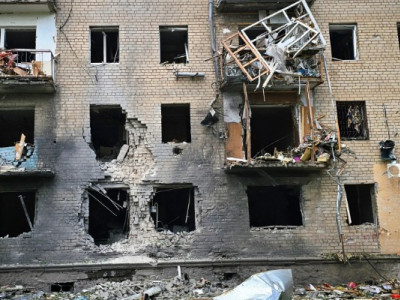
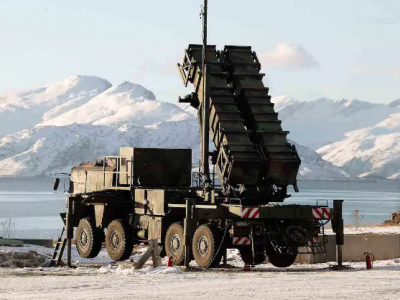
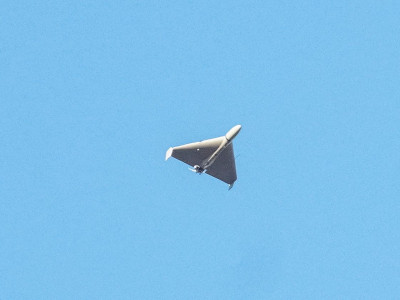
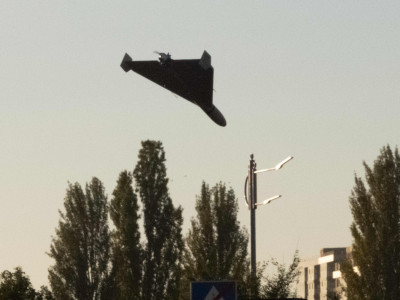
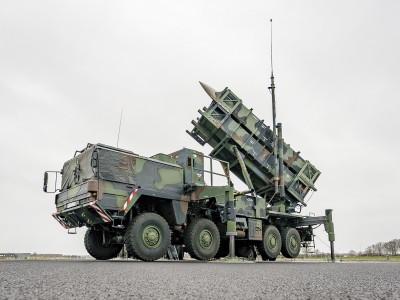
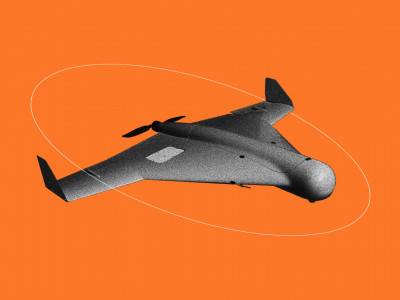
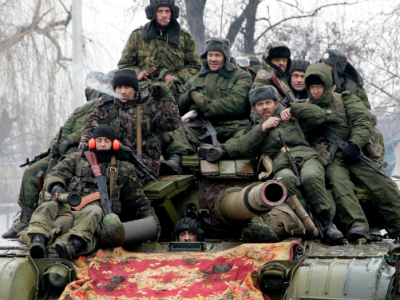
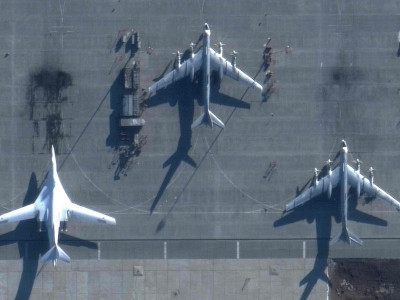
The “sacred” Russian May 9th has transformed into a visible capitulation. With a total absence of heavy armor and Air Defense systems stripped from every region just to protect a single square in Moscow, the Kremlin’s illusion of an “invincible empire” is finally shattering. As Russians watch their oil refineries burn from Ukrainian drone strikes, a realization is dawning: this war cannot be won.
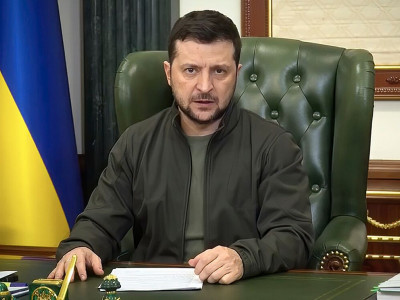
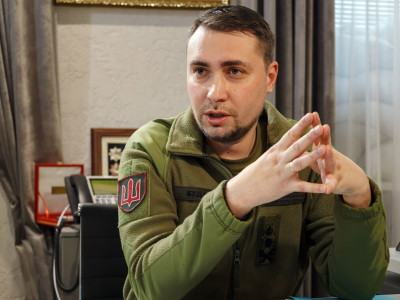
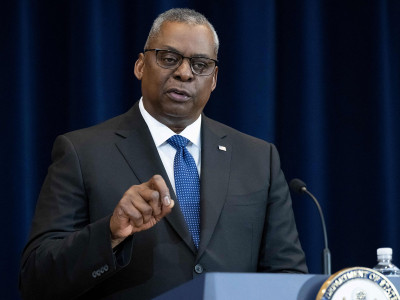
To decode this geopolitical shift, Henry Keen sits down with David Satter – renowned American historian, former Financial Times Moscow correspondent, and the first American journalist expelled from Russia since the Cold War. Satter, who famously exposed the FSB’s role in the 1999 apartment bombings, provides a unique analysis of the psychological and physical collapse of the Russian state.
Read here the full interview with David Satter.
— We are used to perceiving Russia as a global player with seemingly limitless resources and influence. Yet Russia’s war of aggression against Ukraine—and against the international order more broadly—demonstrates the opposite. Moscow has not only failed to protect its own skies from Ukrainian drones, but is also retreating from key geopolitical positions.
To analyze what Ukrainian deep strikes and systemic weakening are doing to the Russian army and Moscow’s global status, we are honored to be joined by David Satter, an American historian, former Moscow correspondent for the Financial Times, and the first U.S. journalist expelled from Russia. Mr. Satter, thank you for joining us.
Why did Vladimir Putin expel you? What lines did you cross?
— There were two main reasons. First, I reported on the 1999 apartment bombings and stated clearly that there is overwhelming evidence that Putin came to power as a result of a terrorist attack on his own people.
When I was expelled, The Moscow Times wrote that it was not surprising I was expelled—what was surprising was that it took so long. The authorities had tolerated me as an example of their supposed liberalism. But after the Euromaidan in 2013, they decided I was a luxury they could no longer afford.
I remain the only American correspondent expelled from Russia since the Cold War.
— You have studied mechanisms of control over Russian society. The regime has sacralized the myth of World War II. What political and psychosocial function does the May 9 parade serve?
— The celebration of victory in the war serves several purposes. First, after the fall of the Soviet Union, Russia lost its claim to legitimacy. The victory in World War II became the last remaining source of that legitimacy.
Without a sense of exceptionalism, Russia would have nothing to justify its oppression of its own people or the denial of basic rights. Even in the 1990s, during the nominally democratic period under Boris Yeltsin, there was an expectation that rulers would eventually resort to propaganda and repression.
War is an effective tool for rallying people. It creates a narrative of overcoming hardship and responding to external threats. It mobilizes society and distracts from internal oppression.
At the same time, the way the war is commemorated ignores its human cost. In cities like St. Petersburg, monuments honor victory rather than the immense loss of life—such as the nearly one million who died during the siege of Leningrad.
The war myth reinforces not only legitimacy but also the idea that the individual is insignificant compared to the glory of the state.
— Now the Victory Day parade is being scaled down. Could this have psychological consequences?
— Yes, very significant ones. Russia is a society deeply influenced by symbols and omens. Historically, events perceived as bad omens have shaped public perception—for example, the tragedy during the coronation of Nicholas II, which many saw as a sign of his doomed reign.
Today, we do not know whether there will be attacks or disruptions. But even without that, the mere spectacle of a parade without heavy military equipment will have a strong psychological effect.
It signals that something has changed—that the state has lost part of its former glory. This cannot be ignored or unseen.
— So this becomes a visible contradiction—Russians were promised security, but now they see vulnerability. Do you think this will affect public perception?
— Yes, it already has. From what I hear from contacts in Russia, many people understand that the war is unwinnable and is leading to the country’s destruction.
At the same time, conspiracy theories circulate, blaming external forces rather than acknowledging that their own leadership initiated the conflict.
Nevertheless, the message that the war is effectively lost—and that what is happening now is a senseless slaughter—is spreading. It is reaching even those circles that initially supported the war.
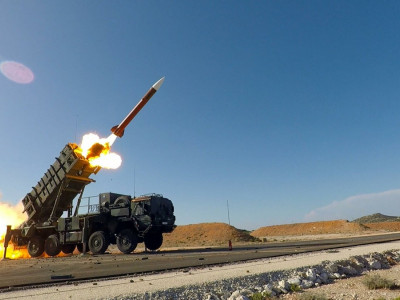
— That’s what is happening in Russia. But what about the West? To guarantee the security of just one square in Moscow, the Russian command stripped air defenses from entire regions, leaving refineries and logistics exposed to Ukrainian strikes. A state deliberately sacrifices strategic infrastructure for a television broadcast. Does that tell the world anything? Or is the attitude still “Russia being Russia”?
— It is important to understand that Russia attaches enormous importance to propaganda. In any situation of internal unrest, the first objective is to seize the television tower in order to control messaging. Television is not seen as a means to inform the population, but as a tool to influence it.
The propaganda value of the Victory Day parade is considered a factor in maintaining military strength, even if strategic industries suffer losses. People across the country will see whether Vladimir Putin appears on Red Square, whether there is an attack, or whether the spectacle is diminished. Given that Ukraine can fill the sky with drones, the concern within the Russian leadership is understandable.
— Will this sense of panic in Russia affect Western politicians who still believe in negotiations with the Kremlin?
— I am in Washington, D.C., and it is difficult to say what will change their thinking. What may influence them is the increasing absurdity of some of their own positions.
However, exposing that absurdity does not address the deeper issue, which is the immorality of the attitude toward a country that is the victim of aggression. For the first time, the United States is effectively siding with the aggressor. That is a shameful episode.
At the same time, Ukraine has demonstrated resilience. Public opinion still supports Ukraine, and it will become increasingly difficult for the administration of Donald Trump to continue policies that favor Russia. This shift will not come from moral reconsideration but from growing public pressure.
— There is also speculation that the Kremlin may want to provoke Ukraine into striking Red Square during the May 9 parade. Given your research into how this regime consolidated power in 1999, do you think Putin could seek such a provocation to justify escalation?
— What goes on in Putin’s mind is difficult to determine. I do not think such a move would be sensible. After years of war, the conditions for a massive patriotic mobilization are not present.
The soldiers dying at the front are not widely regarded as heroes. Recruitment relies heavily on financial incentives, and many view these fighters as mercenaries who accepted the risks.
If major strikes were to occur, the more likely reaction among the population would be that they have been misled. It would reinforce the perception that the war has been based on falsehoods rather than generate a unifying patriotic response.
— What about statements from the Russian Foreign Ministry warning diplomats to leave Kyiv, while at the same time Russia struggles to defend its own territory from Ukrainian strikes? How do you explain this gap between rhetoric and reality?
— The two are directly connected. The more insecure the regime becomes, the more apocalyptic its rhetoric. This pattern existed in the Soviet Union as well. Leaders frequently issued extreme threats at every stage of escalation.
Russia remains capable of carrying out attacks on civilian targets and committing atrocities. However, such actions would ultimately worsen its position.
Ukraine is acting in legitimate self-defense. Every strike it carries out targets an aggressor. Meanwhile, Russia’s destructive actions against Ukraine only strengthen international opposition and further isolate Moscow without achieving its objectives.
— So, to sum it up, the so-called “red lines” have long been crossed. Russian trains, factories, and refineries are burning every day. Moscow’s response seems reduced to loud rhetoric and threats. When an opponent can only generate diplomatic noise while physically losing the war—even in its own skies—isn’t this the right moment for the United States to stop fearing escalation and finally provide Ukraine with all the necessary weapons?
— Of course it is. I am not convinced that fear of escalation is the main factor guiding the United States right now. I have thought about this a great deal and cannot find a clear explanation, but I can suggest a few possibilities.
One is that Donald Trump may take matters personally and has not forgiven Volodymyr Zelenskyy for his role in the events surrounding his first impeachment. It may seem unbelievable that a U.S. president would base decisions on such grounds, but it is difficult to find another rational explanation.
Another possibility is that Russia may have compromising material. This is speculation, but in trying to understand such behavior, these are possibilities that arise. Perhaps one day more information will become available.
— We saw reports that JDAM bombs may be provided to Ukraine. Could this signal a shift in policy, or is it just a one-time decision?
— I believe it is a sign of change. Political dynamics are shifting. There was a widespread belief that Ukraine would e
- Last
News by day
31 of May 2026