Will Orbán's ally winning elections in Slovenia be a problem for Ukraine?

On 22 March, parliamentary elections are set to be held in the Republic of Slovenia.
Although these are already the tenth parliamentary elections since Slovenia declared independence on 25 June 1991, it can already be said that never before has the country’s future depended so much on the outcome of the vote.
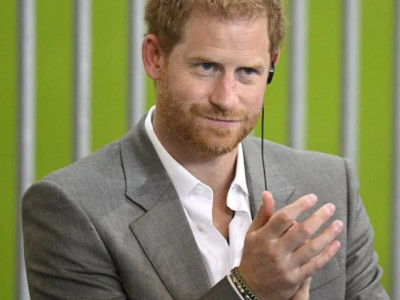
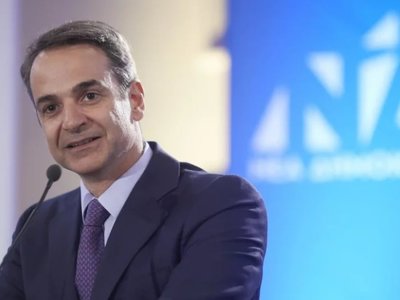
As a result of these elections, former prime minister and right-wing politician Janez Janša could return to power – a scenario that, according to many Slovenians, could worsen relations with the EU and even lead to the "Orbánization" of Slovenia.
Read more about whether such a scenario poses risks for Ukraine in the article by Western Balkans expert Volodymyr Tsybulnyk: Orbán’s friend, but also Ukraine’s: what risks do the elections in Slovenia carry?
On 22 March, nearly 1.7 million Slovenians aged 18 and older will elect 90 members of parliament for another four years. 88 of them are elected through a proportional system, while two, representing the Italian and Hungarian national minorities, are chosen by majority vote.
As in previous elections, the frontrunners are the opposition right-conservative Slovenian Democratic Party (SDS), led by former prime minister Janez Janša, and the center-left liberal Freedom Movement, led by the current prime minister Robert Golob.
March polling shows that the ruling party is rapidly catching up with the opposition and has a chance of winning.
In addition, representatives from New Slovenia – Focus, the Left and Greens bloc, Anže Logar’s Democrats, the Social Democrats and the Resnica (Truth) Movement are also likely to enter parliament.
No party is expected to secure a majority on its own, meaning that difficult coalition negotiations will begin immediately after the elections.
There are not many viable options, and the most likely scenario is a repetition of previous alliances. Both leading parties will seek to form governing coalitions with partners tested in the current parliament.
Here, Anže Logar could hold the "golden share": while he has not committed to anyone yet, his 1-2 seats could prove decisive in forming a coalition.
Under any scenario, only Janez Janša and Robert Golob have a real chance of receiving the mandate to form a new government.
Opinions on Golob’s tenure vary. Some criticise him as too soft and not an effective manager, also accusing him of overreach in team appointments.
Others note that he has governed in exceptionally difficult times, post-COVID recovery, the start of Russia’s war against Ukraine, Donald Trump’s return to power, the war in Iran and more. Despite this, he has managed to keep Slovenia’s economy from sliding into crisis.
His counterpart, Janez Janša, is a more controversial and, in many ways, opposite figure.
Critics describe him as a right-wing populist, a nationalist and a "mini-Trump".
Importantly, Janša is a genuine ally of Viktor Orbán, at least on issues such as countering illegal migration.
However, this alignment does not necessarily imply a pro-Russian shift in Slovenia’s policy. In February 2022, Janša supported Ukraine’s struggle against Russian aggression, backed sanctions against Russia and endorsed assistance to Kyiv, including military aid.
Moreover, while serving as prime minister, Janša visited Kyiv in March 2022 together with the heads of government of Poland and Czechia.
Election day itself may still bring surprises, especially as Slovenia was shaken by a major political scandal just a week before the vote.
What matters for Ukraine, however, is that regardless of who becomes prime minister, no major shifts in foreign policy are expected.
That said, there are concerns that if Janša wins, the EU could gain another "unruly Orbán", possibly even a more hardline one. This would not benefit the EU, which already faces numerous challenges and unresolved problems.
- Last
- February, 05
-
-
-
-
- April, 28
-
-
-
-
-
-
- April, 27
-
-
-
-
-
-
-
-
-
News by day
25 of March 2026