Rehearsal for Macron's replacement: what the local elections reveal about sentiment in France

Last weekend, the first round of the municipal elections took place in France. It did not pick a president, but it exposed the country that will choose one next year.
Next year, France is set to elect a new president, so the recent local vote was expected to provide a snapshot of a country soon to choose Emmanuel Macron’s successor.
Although the second round is still ahead and the names of future mayors in the largest cities, including the capital, are not yet determined, the first round was revealing in itself. Ultimately, only 1,526 communes, or 4.4% of the total, advance to the second round.
The local elections highlighted the rapid marginalisation of the presidential camp. Meanwhile, the far-right improved its results, though not as much as many had expected.
This is particularly important for Ukraine, because while key issues for it, such as sending weapons to Kyiv. The opinion data in the file points to a country that still supports a serious defence posture, but unevenly. In February, 58% of respondents backed a major increase in France’s defence budget. Support for supplying arms to Ukraine, however, stood at 47%, against 39% opposed, down from much higher levels in 2022.
So what changes in electoral sentiment in France were revealed by the local elections? And what does this mean in the context of the upcoming presidential elections?
The first takeaway from the recent vote is voter fatigue.
Official participation reached just 57.1%, the second-lowest first-round municipal turnout of the Fifth Republic after the Covid-disrupted vote of 2020.
In 68% of communes, only one list was registered, which drained any sense of suspense.
In France’s 25,000 communes with fewer than 1,000 inhabitants, voters can no longer pick and choose names on the ballot. They must now vote for a complete list, which have weakened the feeling that a single vote could still shape the final result.
The age divide makes the warning sharper.
An Ifop survey conducted in early February, before the vote, estimated that only 39% of 18-24-year-olds and 46% of 25-34-year-olds were certain to vote, against 72% of voters aged 65 and over.
France’s presidential pre-campaign is beginning in a democracy where younger voters appear significantly less invested in local politics than their elders.
In addition, only 1,526 communes, or 4.4% of the national total, are heading for another vote. In those places, lists above 10% can stay in the race, while lists above 5% can merge with a qualified list.
And what does the vote itself reveal? The results in Paris are particularly telling. Paris is not the whole country, but it it shows many of the same political tensions.
Socialist Emmanuel Grégoire came first with 37.98%, well ahead of Republican Rachida Dati on 25.46%. Behind them, two extremists and one centrist passed the 10% mark.
The result did not produce one clear winner. The left is in the strongest position, but it is still divided.
It offers a simple picture of French politics before 2027: a left that leads without being fully united, a right that remains competitive only through regrouping, and a centre that barely survives.
The right is where 2027 is already being tested most clearly.
The central question is no longer whether the National Rally can score well. It can.
The real question is whether the French right can still exist outside its gravitational pull.
Nice is the clearest case. Eric Ciotti, running with Union of the Right for the Republic (UDR) and backed by the National Rally, finished far ahead of the outgoing mayor Christian Estrosi, 43.43% to 30.92%, with the left also qualified on 11.93%.
Ciotti’s strategie was to benefit from the National Rally backing without displaying it too ostentatiously. The result suggests that, at least in parts of the south, that formula is becoming electorally workable.
Toulon offers the mirror image. There too, the National Rally finished strongly ahead, with Laure Lavalette on 42.05%, against 29.54% for the outgoing mayor Josée Massi and 15.71% for Republican senator Michel Bonnus.
But unlike in Nice, the post-first-round reflex was immediately anti-National Rally: Bonnus withdrew and reached out to Massi. That does not guarantee defeat for the RN. It does, however, show that making a stand against the far right still matters to many French voters and elected officials.
At the same time, the National Rally’s municipal picture remains uneven. In cities of more than 100,000 inhabitants, it reached 20 second rounds, which is better than in 2020 but still worse than in 2014. Outside the Mediterranean strongholds, the movement remained weak in many large metropolitan centres.
In Paris, Lyon, Toulouse, Nantes, Montpellier, Strasbourg and Bordeaux, National Rally candidates all stayed below 8%. One of the reasons identified in the reporting is territorial weakness itself. In those big cities, a third of RN lead candidates were parachuted in or worked elsewhere.
The second takeaway from the recent elections is that the political center no longer structures the political landscape.
Édouard Philippe, Former Prime Minister and the most likely presidential candidate from the presidential camp, may survive. Macronism, as a political organising centre, does not.
Philippe did what he needed to do in Le Havre, finishing first with 43.76% and preserving his national credibility after tying his local fate to his presidential ambitions.
But his case almost proves the opposite of what a healthy centrist bloc would look like.
The documents show that only figures with an existence before Macronism, such as Philippe and François Bayrou, still resist electorally. Elsewhere, the presidential camp is often absent, marginal or reduced to supporting local notables of another colour.
The left is gaining more and more voters each elections.
Its problem is leadership. The Socialist Party remains strong in several major cities, including Paris, Rennes and Nantes, and in Strasbourg Catherine Trautmann, supported by the Socialist Party, finished ahead of both the right and the outgoing Ecologist mayor.
But La France Insoumise is also becoming harder to ignore at local level. In Roubaix, its candidate David Guiraud won 46.6% and came close to being elected in the first round, which points to real local support rather than a temporary protest vote.
The Ecologists, for their part, are no longer the rising force they looked like in 2020, but they still matter because they often help hold together a divided left.
These elections also remind us of an older rule of French local politics: roots matters. In municipal contests, party labels are only part of the story. Voters also look for familiarity, local knowledge and proof that a candidate genuinely belongs to the place they want to govern.
That helps explain why Édouard Philippe’s anchoring in Le Havre strengthens his results, why the National Rally remains weaker in cities where its candidates lack local standing, and why well-known names can still be rejected if they appear parachuted in.
Philippe Gustin, chief of staff to Sébastien Lecornu, was badly beaten in Fougerolles-Saint-Valbert after rivals attacked him as an outsider. Louis Sarkozy also suffered a heavy defeat in Menton after arriving only a few months before the vote.
* * * * *
If there is a winner of the first round, it is not one single camp.
The left remains the best placed in many major cities, from Paris to Nantes and Strasbourg, even if it is still divided over who should lead it.
On the right, the National Rally has not swept the country, but it is continuing to pull the wider right into its orbit, most clearly in places like Nice.
The clearest loser is the centre: Édouard Philippe has preserved his own position in Le Havre, but Macronism no longer looks like the force organising French politics.
The second round will now show whether those trends can be turned into power. Can the left turn first place into discipline? Can the right unite without disappearing into the RN’s orbit? And can the centre still matter beyond a handful of local fiefdoms?
That is what this election is really beginning to answer.
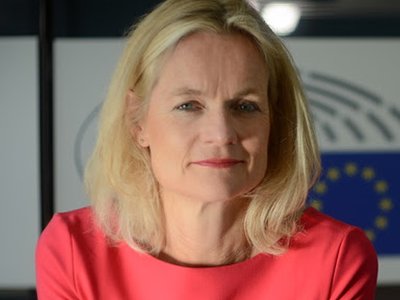
Charlotte Guillou-Clerc
Journalist, France
- Last
- February, 05
-
-
-
-
- April, 28
-
-
-
-
-
-
- April, 27
-
-
-
-
-
-
-
-
-
News by day
25 of March 2026