Our website uses cookies to provide your browsing experience and relevant information. Before continuing to use our website, you agree & accept our Cookie Policy & Privacy.
For full coverage of the crisis in Ukraine, visit Flashpoint Ukraine.
The latest developments in Russia’s war on Ukraine. All times EDT.
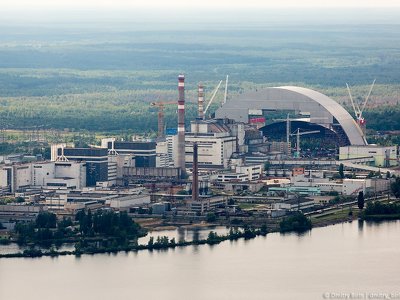
1 a.m.: The head of the United Nation’s nuclear watchdog is set to release a report Tuesday about the nuclear safety and security situation in Ukraine after his team’s visit to examine the Zaporizhzhia nuclear power plant in southern Ukraine, The Associated Press reported.
International Atomic Energy Agency Director General Rafael Grossi will also brief the U.N. Security Council on his team’s findings, the IAEA said.
The IAEA inspectors arrived at the Zaporizhzhia plant September 1 and spent days evaluating damage at the site, how well safety and security systems are working, and conditions for the Ukrainian staff at the plant that has been under Russian control since the early days of Russia’s invasion of Ukraine.
Both Russia and Ukraine have accused the other side of being responsible for shelling in the area of the power plant. The attacks have raised international concern about the prospect of a nuclear disaster.
The IAEA said two of its experts remain at the power plant to “observe the situation there and provide independent assessments.”
12:30 a.m.: Russian gas pipeline Nord Stream 1 will not resume gas supplies until Siemens Energy repairs faulty equipment, Gazprom’s Deputy CEO Vitaly Markelov told Reuters on Tuesday.
“You should ask Siemens, they have to repair equipment first,” he said on the sidelines of Eastern Economic Forum in Russian Pacific port of Vladivostok, when asked about when the pipeline could start pumping gas again.
12:15 a.m.: Russia has raked in $158 billion (158 billion euros) in energy exports in the six months following its invasion of Ukraine, with the EU accounting for more than half, a think tank said Tuesday, according to Agence France-Presse.
The Centre for Research on Energy and Clean Air called for more effective sanctions against Moscow after the invasion sent oil, gas and coal prices soaring.
“Surging fossil fuel prices mean that Russia’s current revenue is far above previous years’ level, despite the reductions in this year’s export volumes,” said the Finland-based organization.
Some information in this report came from The Associated Press, Reuters and Agence France-Presse.