How to Travel Safely in Ukraine in 2026: Documents, Insurance and Safety

Ukraine travel in 2026: war risks, essential documents, insurance, safe routes, and emergency plans for foreign visitors.
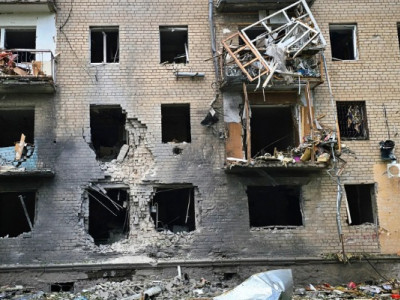
Ukraine remains open to foreigners, but a trip here cannot be planned like an ordinary tourist journey. Civilian flights to Ukrainian airports are not operating, curfews are in effect in different regions, and missile and drone attacks can occur far from the front line.
The U.S. Department of State warns that the security situation in Ukraine can change rapidly, while the threat of missile and drone attacks remains even in areas away from the front line. Before travelling, you should therefore check not only your documents but also your government’s travel advice, your insurance terms and the situation in every city on your
itinerary.
Taras Lozynskyi, First Deputy Head of the State Agency for Tourism Development of Ukraine, told Dilo that the lack of war-risk insurance affects foreigners’ decisions about travelling to Ukraine. Before the full-scale war, foreigners also travelled to Truskavets and Skhidnytsia for health and wellness treatments, but today safety and insurance coverage have become some of the main factors when planning a trip.
Read also: oint Ukraine-EU Border Crossings: How Will Controls Work?
Requirements depend on your nationality, the purpose of your trip and the length of your stay. Before departure, foreigners should check the information on the website of the Ministry of Foreign Affairs of Ukraine or contact the Ukrainian embassy in their country.
The following may be required to cross the border:
Your passport must remain valid throughout your stay. Some countries may require it to remain valid for several months after the end of the trip. If you are travelling with a child or entering the country by car, you should also prepare the child’s documents, driving licence, vehicle registration certificate and vehicle insurance.
For certain categories of foreigners, Ukrainian diplomatic missions specify a requirement for medical insurance covering the entire period of stay, with minimum coverage of EUR 30,000 or its equivalent. Before purchasing a policy, check whether it meets the requirements applicable to your nationality.
Make copies of your passport, insurance policy, tickets, bookings and embassy contacts. Save them on your phone for offline access, in cloud storage and on paper. If your smartphone runs out of battery or mobile service is unavailable, paper copies can help confirm your identity and itinerary.
Read also: Do Tourists Get Insured Against War Risks in Ukraine in 2026?
In autumn 2026, foreigners should primarily consider the western regions of Ukraine, which are farther from active hostilities. Zakarpattia, Lviv, Ivano-Frankivsk, Chernivtsi and Ternopil regions have tourist infrastructure, hotels, private clinics and land transport connections with European Union countries.
However, “relatively safer” does not mean “safe”. Air raid alerts are also issued in western regions, and infrastructure strikes, power outages, communication problems and transport delays are possible. Some government travel advisories recommend travelling to parts of western Ukraine only when absolutely necessary.
Zakarpattia can be convenient for a short trip because of its proximity to the borders with Hungary, Slovakia and Romania. Lviv has the widest choice of hotels, private medical facilities and international transport routes. Ivano-Frankivsk region is suitable as a base for trips to the Carpathians, but mobile coverage can be unstable in mountainous areas, and access to a hospital may take longer.
Kyiv has the largest range of services for foreigners, but the capital remains a potential target for missile and drone attacks. Trips to Donetsk and Luhansk regions, areas near the front line, temporarily occupied territories and areas with a mine hazard cannot be considered ordinary tourism.
Don't want to miss important updates and useful articles? Subscribe to our weekly newsletter!
Standard travel insurance may not cover the consequences of war. Policies often exclude hostilities, missile strikes, drones, mines, travel to countries with elevated security risks or trips made against official travel advice.
Before purchasing a policy, check:
The amount of coverage is not the only thing that matters. For example, a policy with EUR 30,000 in coverage will not help after a missile strike if the policy excludes injuries resulting from war-related events. You therefore need to check not only the limit but also the list of covered events.
The policy should be purchased before entering Ukraine if it is a condition for crossing the border. It should remain valid without interruption from the beginning to the end of the trip. If you purchase insurance after an injury, illness or other incident has already occurred, it will not cover the costs retroactively.
Travelling to Ukraine? Get insurance with sufficient medical and war-risk coverage before your trip.
Foreigners should be prepared to pay for medical services themselves if a particular case is not covered by their insurance. At a private clinic, a doctor’s consultation may cost approximately USD 30–60, while prices in Kyiv and large medical networks may be higher depending on the specialty and facility.
Tests, ultrasound scans, CT scans, medicines, hospitalisation and surgery are charged separately. One day in hospital may cost anywhere from several dozen to several hundred dollars. Intensive care, complex surgery, transportation to another city or medical evacuation abroad can cost considerably more.
A private clinic may require a payment guarantee before treatment begins. If you have insurance, you should immediately contact the insurance company, provide your policy number and find out which medical facility you can visit.
In a critical situation, call an ambulance first and then contact the assistance service. British travel advice also recommends checking whether your insurance covers local treatment and unexpected medical evacuation.
Because Ukrainian airspace is closed, foreigners can enter Ukraine by train, bus or car through Poland, Slovakia, Hungary, Romania or Moldova. Plan your route with extra time for queues, border checks and delays.
Rail transport remains an important way of travelling, but its infrastructure is regularly attacked. According to Ukrzaliznytsia, passenger carriages, locomotives and stations were damaged in 2026, while more than 1,700 railway facilities in total came under attack.
In September 2026, Russian drones attacked a bus and a train in southern Ukraine. Passengers and crew members were evacuated, but the incident showed that even civilian transport remains at risk.
This does not mean that all trains should be cancelled. However, do not plan a connection just 20–30 minutes after arrival. A train may stop because of an air raid alert, evacuation, infrastructure damage or a route inspection.
A bus is not automatically safer than a train. Its advantage is a larger number of routes and the ability to reach cities without convenient railway connections. At the same time, buses depend on road conditions, checkpoints and curfew restrictions.
When booking a hotel or apartment, check more than just the rating, price and photos. Contact the property and ask where the shelter is located and how long it takes to reach it.
Ask whether the shelter is accessible at night and whether there is a generator, a water supply and heating in case of a power outage. Do not rely on the lift: it may not work during a power cut, so you should know whether you can quickly get downstairs using the stairs.
For an apartment, check the exact address on a map, the distance to the shelter, the floor and whether emergency lighting is available. Do not choose accommodation near military facilities, major energy infrastructure, industrial sites or areas with restricted access.
Also check whether late check-in is possible. If your train is delayed and arrives after the curfew begins, the hotel should explain in advance how guests will be admitted.
Before your trip, purchase a Ukrainian SIM card or eSIM, but keep roaming as a backup option. Take a power bank, a car charger and, if possible, a second SIM card from another operator.
Download the following apps and services:
Save your tickets, bookings, insurance policy, hotel address, embassy contacts and emergency service numbers in your phone’s memory. Do not rely solely on an air raid alert app: during power outages, cyberattacks or network congestion, push notifications may be delayed.
When an air raid alert is announced, leave the street and go to the nearest shelter. If you are in a café, shop, hotel or railway station, follow the staff’s instructions and do not attempt to continue your journey.
If there is no designated shelter nearby, enter a solid building and move away from windows. Do not remain in open areas or near glass façades, bridges and major transport hubs.
Do not leave the shelter until the official all-clear, even if the siren temporarily stops. Do not photograph air defence operations, explosions, military equipment or impact sites in real time.
After an attack, do not approach missile or drone debris or unknown objects. They may be explosive. Move to a safe distance and inform the police or emergency services.
Shops, cafés, shopping centres and other establishments may suspend operations during an air raid alert. Hospitals continue to provide emergency care, but scheduled procedures may be postponed.
Planning a trip to Ukraine? Check whether your policy covers treatment, hospitalisation and the consequences of war risks. If it does not, purchase insurance with war-risk coverage from Visit Ukraine!
The local military administration sets the curfew hours. They may differ from one city to another and may change depending on the security situation.
During curfew, travelling on the streets may be prohibited without a special reason or permit. Police and military personne
- Last
-
-
-
-
-
-
-
-
-
-
-
-
-
-
-
- October, 24
-
-
-
-
News by day
25 of October 2026