Insurance for a Trip to Kharkiv

A trip to Kharkiv requires war-risk insurance for foreign visitors. Learn about safety, travel routes, documents and how to prepare for your visit
Kharkiv remains accessible to foreign visitors, but regular attacks, its proximity to the border and disruptions to infrastructure require careful preparation.
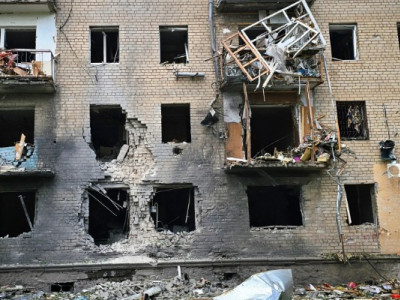
The city continues to function during the war: shops, hotels, hospitals, restaurants, the railway station and public transport remain open. However, everyday life can change after a single attack. Russian forces regularly target the city with missiles, attack drones, FPV drones and other weapons.
Foreigners planning a trip to Kharkiv should therefore arrange not only their route, accommodation and documents, but also insurance with comprehensive war-risk coverage. A standard travel policy may cover illness and everyday injuries while excluding the consequences of explosions, falling debris and other war-related events.
Read also: How Many Ukrainians Are Willing to Leave Their Homes if the Situation Worsens This Winter?
Kharkiv is located approximately 18 kilometres from the frontline and not far from the Russian border. As a result, the city remains one of Ukraine’s most vulnerable major urban areas. Even when the situation at the front changes, the threat to civilian infrastructure remains.
As of September 2026, around 1.4 million people live in Kharkiv. More than 200,000 of them are internally displaced persons. Before the full-scale war, approximately 1.56 million residents were officially registered in the city, while the actual population was estimated at around 2 million when students were included.
After the full-scale invasion began, approximately 80% of Kharkiv’s residents left the city. Several waves of return followed, but the mayor does not consider this a sign that the situation has fully normalised. He stresses that there are currently no completely safe places in Ukraine and that each person must decide independently whether to return or travel to Kharkiv.
This is particularly important for foreign visitors: Kharkiv is not closed to travellers, but a trip there cannot be planned like an ordinary tourist journey to a peaceful city.
Russian attacks on Kharkiv continued regularly in September 2026. Between 7 and 13 September, the city was attacked 21 times. Almost half of the strikes involved FPV drones. Russian forces also used fibre-optic drones, Molniya drones, Italmas jet drones and Shahed drones.
Civilian targets were affected, including apartment buildings, courtyards, cars, electrical substations, hospital grounds and educational facilities. During that week, one man was killed and ten people were injured, including three children.
Between 14 and 20 September, Kharkiv came under attack 13 times. Three people were injured, and five city districts were affected: Kyivskyi, Shevchenkivskyi, Slobidskyi, Osnovianskyi and Industrialnyi. Russian forces used FPV drones, Molniya drones, jet-powered Shahed drones and Banderol drones.
The attacks do not take place only at night or during large-scale missile strikes. On 20 September, two military drone strikes were recorded in different parts of Kharkiv. One drone attacked the central part of the city, while another targeted the Kyivskyi district.
Attacks on civilian facilities are a particular concern. In September, a Russian jet-powered drone hit the Epicentr shopping centre in Kharkiv, injuring an employee. Damage to a railway station in Kharkiv Region was also reported.
In August, an attack on an apartment building in the Saltivskyi district destroyed several floors. One person was killed and 37 people were injured. Five victims were hospitalised, including a woman who was in serious condition.
These facts explain why visitors to Kharkiv need insurance that explicitly covers war risks. It is not enough to have medical insurance; you should also check whether it covers injuries caused by blast waves, falling debris, fires following an attack and other events specified in the contract.
Read also: What to Do If You Are at the Border During a Drone Attack: Ukraine’s Border Guards Explain
Missiles, guided aerial bombs and long-range attack drones were previously considered the main threats to Kharkiv. In 2026, the city increasingly came under attack from FPV drones.
These drones are operated remotely in real time. They can target not only large stationary facilities but also individual cars, petrol stations, private homes and people in the streets.
Because of Kharkiv’s short distance from the frontline, FPV drones can threaten areas that were previously considered less dangerous. The risk is not limited to industrial zones or the outskirts: attacks are also recorded near residential neighbourhoods, roads, shops and public facilities.
For travellers, this means that safety cannot be assessed solely by the distance to the railway station or city centre. Before travelling, find out where the nearest shelter is, how local transport operates and what to do during an air-raid alert.
For a trip to Kharkiv, choose an insurance product that directly covers passive war risks. This refers to situations in which a civilian is not participating in hostilities but is injured by an explosion, shelling, falling debris or another war-related event covered by the contract.
Standard travel insurance usually covers sudden illnesses, everyday injuries, emergency medical assistance, hospitalisation within the insured sum and transportation to a medical facility.
However, a standard policy may exclude war, terrorist attacks, military operations, missile strikes and explosions. Therefore, simply having medical insurance is not enough. Before purchasing a policy, carefully check which events are included in the contract.
Visit Ukraine insurance with war-risk coverage is valid in the part of Ukraine controlled by the Ukrainian authorities, including Kharkiv, provided that the relevant part of the city is not classified as an active combat zone or another excluded territory. Check the current territorial restrictions in the policy terms.
Travelling to Kharkiv? Purchase insurance with war-risk coverage before entering Ukraine.
Depending on the selected plan and the policy terms, insurance may provide medical assistance, treatment and benefits for specified injuries. The coverage may include concussions, fractures, severe limb injuries, penetrating head or brain injuries, loss of sight or hearing, the consequences of a blast wave, injuries caused by falling debris and death resulting from an accident related to a passive war risk.
The exact list of benefits, limits and documents required to file a claim is determined by the specific insurance programme. The policy does not cover participation in hostilities, travel to military positions, presence in an active combat zone or deliberate violations of safety rules.
Insurance also does not mean that every visit to a doctor will automatically be paid for. In the event of an insured incident, follow the procedure set out in the contract: seek medical assistance, notify the insurance company and keep your medical documents and proof of expenses.
Planning a trip to Kharkiv? Buy a policy with comprehensive war-risk coverage in advance.
It is best to purchase the policy before crossing the Ukrainian border. In that case, the insurance begins to operate when you enter Ukraine, provided this is stipulated by the selected programme.
If you purchase the policy after arriving in Ukraine, a 24-hour waiting period may apply. This is particularly important in Kharkiv: a dangerous event could occur shortly after your arrival, while the insurance protection would not yet be active.
Save the policy on your phone and create an offline copy. Send the document to a relative or colleague who knows your route. Along with the policy, save the insurer’s telephone number, emergency contacts, your accommodation address and the address of the nearest medical facility.
Insurance does not make the journey safe, but it can reduce the financial consequences of an injury. In Kharkiv, where attacks can happen suddenly, this preparation should not be postponed until arrival.
Civilian air travel in Ukraine remains suspended, so there are no direct flights to Kharkiv. Foreign visitors must first travel to a neighbouring European country and then continue by land — by train, bus or car.
Ukraine can be entered through land borders with Poland, Slovakia, Hungary, Romania or Moldova. The most convenient route depends on the country of departure, ticket availability and onward connections to Kharkiv.
From Poland, travellers can reach Kharkiv by rail through Ukrainian transfer hubs or use direct or connecting services if they are available on the chosen date. International and domestic timetables can change, so check them immediately before purchasing a ticket.
Departure times, operating days and the availability of direct services may change. Do not rely on old timetables from previous years. Check current information on the official Ukrainian Railways services or through the booking system.
Rail remains one of the most convenient ways to reach Kharkiv from Kyiv, Lviv and western Ukraine. However, trains may be delayed because of air-raid alerts, attacks, infrastructure damage or security measures. Leave enough time for transfers and do not plan connections with only a few minutes between them.
In September 2026, Ukraine updated the rules governing railway operations during air-raid alerts. Train movements and boarding may depend on the level of threat and the specific situation along the route.
Don't want to miss important updates and useful articles? Subscribe to our weekly newsletter!
Buses to Ukraine leave daily from many European cities. They often arrive in Lviv, Kyiv, Uzhhorod or Odesa, from where travellers can continue to Kharkiv.
A bus may be convenient for travellers with limited luggage or those looking to save money. However, the journey may take longer because
- Last
-
-
-
-
-
-
- September, 22
-
-
-
-
-
-
-
-
-
-
-
-
-
News by day
23 of September 2026