Europe’s Turn to Debt-Funded Defense Is Reshaping the West

Instead of residual financing of defense, Europe in 2026 is launching credit engineering and joint debt mechanisms, forming a new architecture of Western security.
Read the FULL article by Anton Kuchukhidze, political scientist and foreign policy analyst, expert at the “United Ukraine” Think Tank.
In 2026, Europe is undergoing a fundamental transformation in how it approaches security and defense financing.
As Anton Kuchukhidze argues, defense is no longer treated as a secondary or residual function of the state. For decades, European policy relied on the assumption that security would be guaranteed externally—primarily by the United States—while internal priorities focused on social stability, green transition, and fiscal discipline. That model is no longer sustainable.
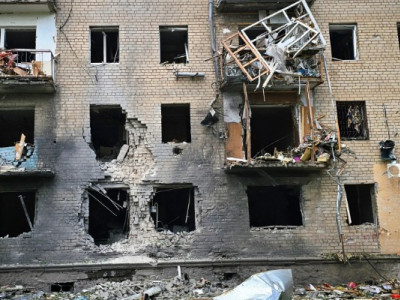
Russia’s full-scale war against Ukraine, the depletion of European military stockpiles, growing pressure from Washington, and instability in other regions have forced the European Union to rethink its strategy. Kuchukhidze emphasizes that defense is now becoming a structural priority, increasingly financed through credit engineering, joint borrowing mechanisms, and new financial instruments layered on top of existing budget frameworks. The debate over rearmament has therefore expanded beyond military considerations into a broader discussion about power, capital, and risk within the West.
The scale of this shift is already evident. EU defense spending reached approximately €343 billion in 2024 and was projected to grow to €381 billion in 2025—around 2.1% of GDP. This marks a decade-long upward trend and an increase of nearly two-thirds compared to 2020. As Kuchukhidze notes, this is not a temporary adjustment but a structural change in European priorities.
A central element of this transformation is the SAFE mechanism (Security Action for Europe). This initiative provides up to €150 billion in long-term loans to support defense investments and joint procurement among member states. Adopted by the Council of the EU in May 2025, SAFE represents a new financial architecture. As Kuchukhidze explains, it is not a traditional centralized defense budget but a coordinated credit framework designed to encourage collective procurement and avoid fragmented national spending patterns.
Crucially, SAFE focuses on joint acquisitions and integrates defense industries across the EU, the European Economic Area, and Ukraine. This makes it more than a technical tool—it is an attempt to build a European “debt engine” for rearmament. By early 2026, the European Commission had already approved initial national plans for a number of countries, including Poland, Romania, Italy, and several Baltic and Nordic states, demonstrating that the mechanism is moving from concept to implementation.
At the same time, Kuchukhidze points out an important limitation. While financial resources are expanding rapidly, Europe’s industrial capacity to absorb and translate these funds into actual defense production remains constrained. The European Council, in its March 2026 conclusions, explicitly called for more concrete projects and increased output from the defense industry. This reflects a structural imbalance: funding is scaling faster than production capabilities.
Politically, Europe has already entered an era of rearmament. Industrially, however, it is still adapting to this new reality.
Summarizing, Kuchukhidze highlights a deeper paradox. Europe is not ready to abandon the American security umbrella, yet it is increasingly compelled to reduce its dependence on it. Analytical assessments within the European Parliament frame the objective as achieving the capacity for autonomous action while maintaining strong cooperation with North Atlantic Treaty Organization.
In this evolving system, the West is not fragmenting but recalibrating. The United States is pushing European allies to assume greater responsibility for their own defense, while Europe is responding by developing new mechanisms for financing, procurement, and industrial coordination. Strategic autonomy, in this context, is not an anti-American project—it is a form of insurance against uncertainty.
Read the FULL article on The Gaze: Europe Is Rebuilding Its Security with Debt — And Changing the West in the Process
Read also: Kenya Moves to Prosecute Citizens Recruited Into Russia’s War in Ukraine
- Last
News by day
4 of May 2026